Chiloquin, Oregon, and Kamikatsu, Japan, are two small, isolated, and resource-dependent communities built around a single industry. But once their core economic sector vanished—and despite different cultures, institutions, and planning systems—they arrived at the same answer: Instead of chasing growth, they decided to focus on their existing assets and work with what remains.
Most economic development policy frameworks assume that growth is the way to fight decline. The underlying logic equates population decline with failure, which creates a sense of inadequacy that encourages municipal managers to look outward for the missing elements that could, ultimately, restore growth. As such, the standard economic development playbook suggests that local governments attract residents, court businesses, expand their tax base, and find a new “brand” for themselves. It is an approach that treats growth both as the engine and the goal.
Pro-growth approaches have had limited, if any, success to date. Often, they are expensive and leave the needs of the actual community—those still living there—unattended. Yubari, Japan, is a clear example. Facing depopulation and declining tax revenues following the collapse of mining, the local authorities pursued costly growth-driven interventions, including an amusement park, new museums, and an international film festival. But the heavy investment required to sustain this expansionist program limited Yubari’s capacity to provide essential services, leading to its de facto bankruptcy in 2006. Ultimately, aggressive pro-growth spending accelerated its financial problems without reversing depopulation. As of April 2026, Yubari’s population stands at 5,709—95% below its peak population of 116,908 in 1960.
Yet, neither Chiloquin nor Kamikatsu chose this path. They both looked inward and worked with their existing resources to improve quality of life. What follows are their stories.
Chiloquin, Oregon: Remaking Downtown to Make It Work for Everyone
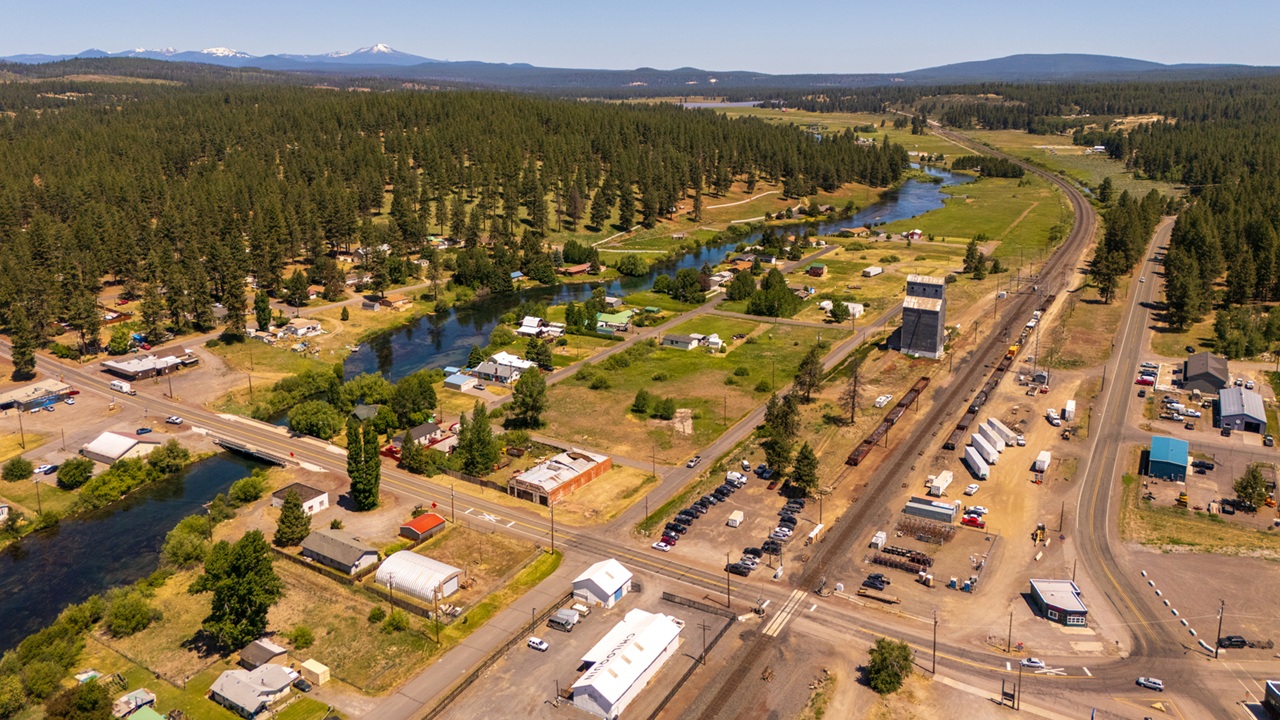
Chiloquin, Oregon, is a city of fewer than 800 people within an area of less than a square mile in southern Oregon. More than half the city’s residents are Native American, of whom many are members of the Klamath Tribe. Chiloquin is not only small, but isolated: the nearest relatively large city, Klamath Falls (population 22,300), is a 54-mile roundtrip. From its beginnings in 1910, Chiloquin was a logging town. Local sawmills and other timber-related jobs formed the backbone of the local economy and supported a bustling downtown with multiple shops and offices. But when Oregon’s timber industry began to decline in the 1980s, so did Chiloquin. Gradually, Chiloquin’s small downtown grew quieter. Businesses closed or left, and buildings stayed vacant.
Chiloquin struggled for several decades after the decline of the timber industry, but today, residents are making strides toward rebuilding economic vitality and improving local quality of life. The city’s path forward, therefore, has to involve a different approach, and to date, residents are focused on using available resources in new ways.
One of the ways they’ve done this is by addressing blight. In 2021, Chiloquin secured several brownfields grants from the U.S. Environmental Protection Agency (EPA) to conduct environmental assessments of downtown buildings. For example, the Hirvi Building had been a downtown staple ever since it opened in the 1920s. At various points, it hosted a bookstore, clothing store, a Klamath Tribe administrative office, and several other businesses. The Hirvi Building sat vacant from about 1980 to 2020, and in cooperation with the building’s private owner, the city used some of its EPA funding to assess the Hirvi Building for potential contamination.
Assessments determined that the building was uncontaminated, which cleared the way for a $200,000 state grant to support new windows, doors, heating, ventilation, and exterior stucco. The building’s private owner invested significantly more in interior improvements, and today, the Hirvi Building is once again a key part of downtown Chiloquin. Its four retail bays are full, with a bakery, a marijuana dispensary, a feed store, and a printing shop. At the rear of the building, six offices are on their way to being occupied.
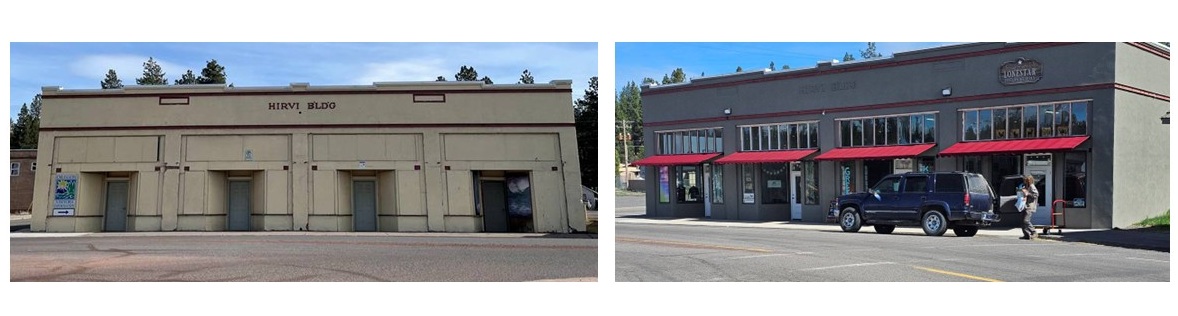
“It’s just created this atmosphere in downtown,” says Cathy Stuhr, special projects manager for the city. “When you go into town it’s vibrant and there are people on the street. And every morning when the bakery opens, there’s a line.” Downtown Chiloquin today is almost unrecognizable from even five years ago. The Hirvi Building’s success has sparked further activity, and more and more buildings are now occupied. Chiloquin will never be what it was in the 20th century, but that’s not a loss. “We’re looking at taking what we have, making it look better, and putting it back into use,” says Stuhr. And so far, that focus has delivered significant results.
Recognizing that its future is unlikely to involve significant population growth, Chiloquin is also working proactively with state officials to identify more ways for small Oregon towns to share resources. “Could we have a single city planner shared between multiple nearby communities? City engineer? Accountant?” asks Stuhr. “These are the kinds of models we’re trying to build because every community needs these services, but we also struggle to support the costs.”
Kamikatsu, Japan: How a Small Town Reinvented Itself
Kamikatsu is one of the smallest local authorities in Japan. With a population of 1,380 in 2020—55% of whom were over age 65—the town has shrunk by more than 75% since 1955. Yet, Kamikatsu frequently shows up in international media outlets—from the Washington Post to the BBC1 —as an example of how a small community can turn its constraints into drivers of reinvention.
Throughout history, the town’s conditions shaped its economy. With 90% of its area covered by forests and characterized by a mountainous terrain, Kamikatsu’s economy rested on logging and small-scale agriculture, where mikan (mandarin orange) orchards covered the patches of cultivable land in the mountains. Kamikatsu was also too isolated and remote—the mountainous terrain stretches the 25-mile journey from the nearest city of Tokushima to approximately one hour by car—for much else, making its narrow economic base structurally fragile.
The compound loss of its core industries—gradually in the case of forestry and overnight in the case of agriculture—forced Kamikatsu’s reinvention. While increased domestic and international competition decimated the forestry industry during the 1970s and 1980s, an unusual cold snap in 1981 killed the majority of the town’s mikan orchards, limiting agricultural production for years to come. Bereft of its main economic sectors—and already aging and depopulating—the town started to look for alternatives.
Yokoishi Tomoji, an officer in the Kamikatsu Agricultural Cooperative, tried substituting mikan with shiitake mushrooms. The effort failed because it was difficult for
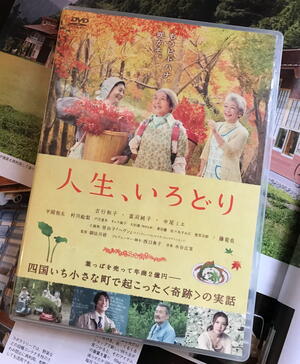
the town’s aging farmers to work with the heavy logs needed for shiitake cultivation. Years later while dining, Yokoishi noticed how a young woman appreciated the tsumamono —the decorative leaves and flowers used in high-end traditional Japanese restaurants and inns—on her plate. Leaves and flowers, he thought, were already abundant in Kamikatsu. They were also lightweight and easy to harvest, making them suitable for the town’s aging farmers. Despite widespread skepticism, and with only four women agreeing to join, Yokoishi established the Irodori (literally, “coloring”) company in 1986 to bring Kamikatsu leaves to the rest of Japan.
The Irodori company had a rocky start before becoming a viable source of income for farmers. Yokoishi soon realized that picking leaves wasn’t enough. To succeed, Irodori would need to attend to the realities of the tsumamono market. He started researching high-end restaurants to better grasp their needs and the sought-after qualities of decorative leaves and flowers. Based on this work, Irodori farmers started looking for surprising leaves—those with striking colors or shapes—as well as packaging same-size leaves together so restaurants could easily match them to dishes. He also understood that Japanese cuisine tends to anticipate seasons.
Then, he introduced early cultivation techniques learned from the town’s forestry industry to better meet market needs. Following these efforts, Irodori took off. It grew over the years, always attuned to new developments. For instance, in 1999, Yokoishi implemented a point-of-sale IT system, fairly unusual for agricultural businesses at the time, to link farmers with restaurants, allowing farmers to use market data to improve planning and sales. With some farmers making over 10 million yen (roughly $60,000) a year, it seems that in Kamikatsu, money does grow on trees.
Kamikatsu later applied the same logic to a different problem: solid waste management. Changes in national legislation banned the open burning of waste—Kamikatsu’s sole option—leading to the construction of two small incinerators in 1998. But the dioxin control law of 2000 rendered one of the new incinerators unusable, with both shutting down by 2001. Faced with high collection costs due to its dispersed settlement pattern and lacking the financial capacity to build a compliant incinerator, the town was left without a viable conventional waste management solution.
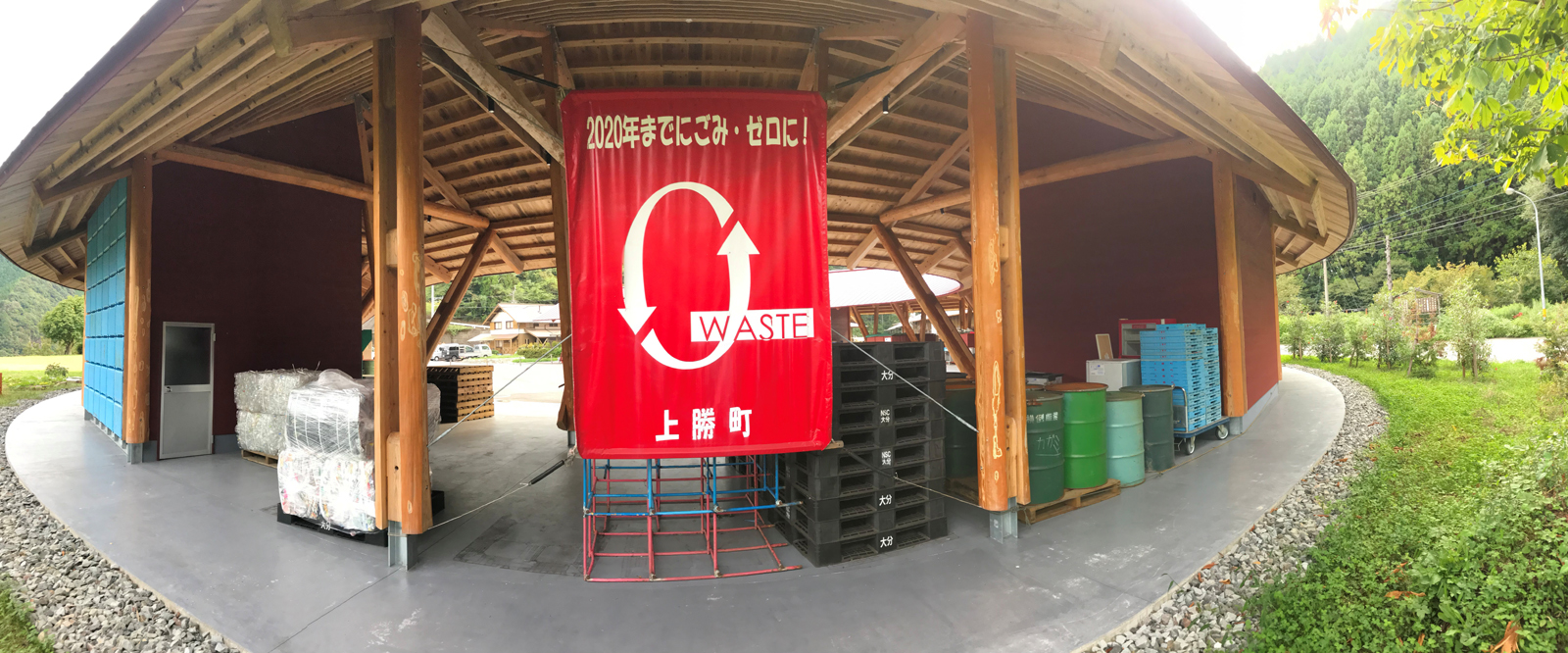
The town turned to a community-based sorting system in which residents sort waste and deliver it to the Gomi Station (pickup point) themselves. The number of categories grew as years passed, starting with nine in 1997 and reaching 45 types (within 13 categories) by 2016. Officials engaged with residents, visiting all 55 hamlets to explain the system. At the same time, a volunteer group named Recycle Kamikatsu supported older residents and those unable to deliver their own waste. Given that organic waste represented 40% of household refuse, the town subsidized electric composters, reaching a 97% adoption rate while compost further supported farming. Over the years, Kamikatsu’s recycling rate grew to 80%, well above the 20% national average. Sorted recyclables generate around 3 million yen annually (roughly $19,000).
Kamikatsu has woven the zero waste notion into its identity. Capitalizing on the initial success of its recycling initiatives, the town became the first Japanese local government to issue a zero waste declaration in 2003. This brought attention to the town, drawing new business partnerships (such as Suntory’s bottle-to-bottle recycling initiative) tourists, and migrants. The Gomi Station became a community hub where people also came to socialize and to learn about waste. It grew into a one-stop center for recycling that included a hotel (opened in 2020) to welcome people from outside the town. Even though the town has not reached its objective of becoming a zero waste place, now set for 2030, it has turned every condition that should have worked against it—size, isolation, population aging, economic difficulties—into a source of purpose.
Beyond the Growth Playbook
On paper, Chiloquin and Kamikatsu should have little in common besides both being small rural communities. Yet, they both approached economic development by leveraging existing assets to benefit the community.
While remoteness, aging, and decline are usually framed as problems, in Kamikatsu, they forced creative solutions that wouldn’t have emerged in a growing town with ample resources: the town found value in leaves and garbage, things every community has but few think of as economic assets.
While a vacant and declining downtown is usually read as terminal decline, in Chiloquin, it was treated as raw material for renewal: the Hirvi Building went from 40 years of vacancy to almost full occupancy, bringing back pedestrian traffic to the area.
Chiloquin and Kamikatsu show that the most productive path for struggling small communities isn’t attracting what’s lacking but activating what they already have. Chiloquin refurbished existing buildings to invigorate its downtown; Kamikatsu found new economic activities tailored to aging farmers. They both accepted their reality and built around it. They also redefined what success looks like. Traditional metrics—economic growth, tax base expansion, population figures—fail to capture the more intangible elements sustaining communities: older residents with purpose and places for people to meet.
When population growth is off the table, the question is not how to increase numbers but how to make the community work for the people who are still there. For managers in small communities, the first step isn’t a new strategic plan, campaigns to attract residents and businesses, or a rebranding exercise. What is needed instead is an honest inventory of what the community already has and the willingness to build from there. Chiloquin and Kamikatsu followed this path, developing solutions that suited their local reality—assets and constraints—to meet the needs of existing residents. A similar self-assessment will allow other small communities to tap into their unexplored potential as a source for renewed vitality and well-being.
FERNANDO ORTIZ-MOYA, PhD, is an assistant professor at the Waseda Institute for Advanced Studies, Waseda University in Japan.
SARAH SIELOFF, AICP, is an urban planner at Haley & Aldrich in Bellingham, Washington.
Fernando Ortiz-Moya’s contribution to this work was supported by JSPS KAKENHI Grant Number JP26K07829.
Endnote
1 See, for example, Shannon Osaka, ‘Postcards from Kamikatsu, Japan’s “Zero-Waste” Town,’ Washington Post, April 27, 2022; and ‘A Shrinking Town with Big Ambitions,’ BBC Future, November 11, 2019.
Publish with ICMA!
We’re searching for interesting and insightful stories that can help others learn a memorable takeaway to serve their communities better.
