Anyone who has worked in local government knows that incivility comes with the territory. From contentious council meetings to challenging employees and frustrated residents, city and county managers regularly navigate situations that test their patience.
But what if some of the behaviors we find most frustrating aren't just signs of difficult personalities but symptoms of something deeper?
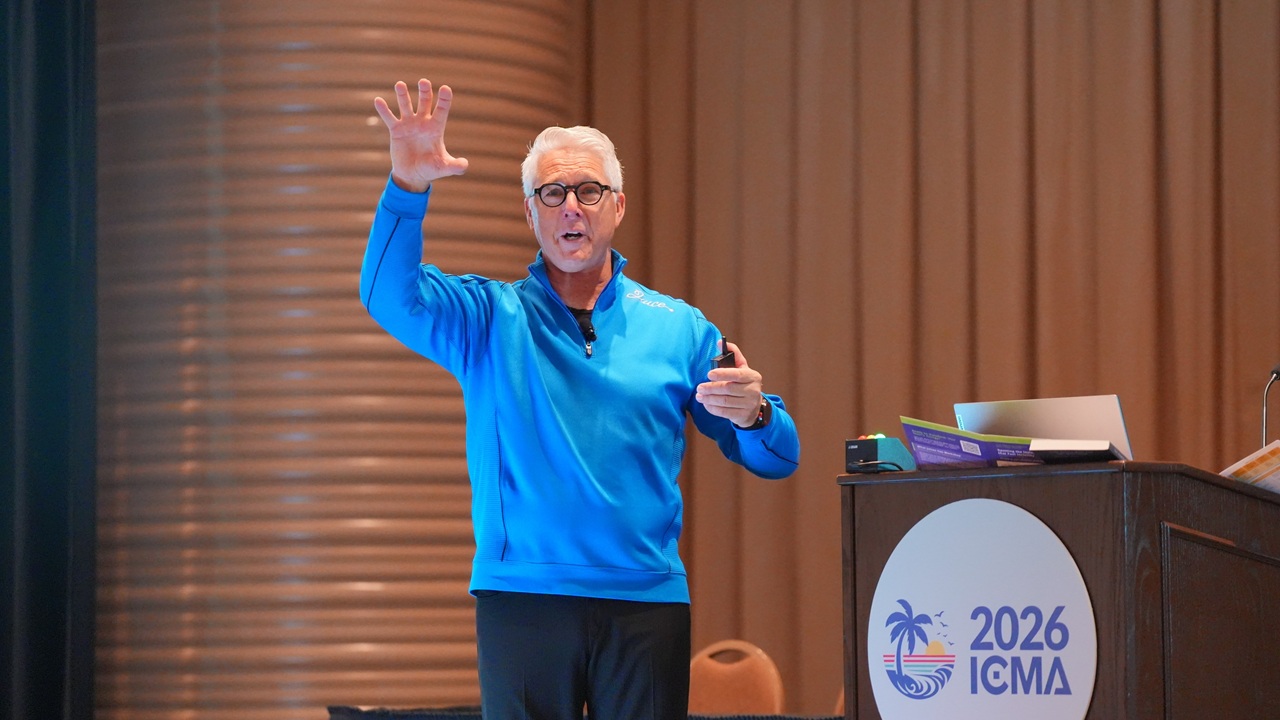
That was the question Brady Wilson, co-founder of Juice Inc. and engagement expert, posed during his Game Changer session, “Spotting the Invisible Forces that Fuel Incivility (and How to Neutralize Them),” at the 2026 ICMA Annual Conference in Long Beach, California.
Wilson's central message was both simple and powerful: Behind many difficult behaviors are fundamental human needs that aren't being met. Understanding those needs can transform how leaders respond to conflict.
When Unmet Needs Become Bad Behavior
Wilson compared human needs to oxygen. Just as a drowning person might instinctively pull down someone attempting to rescue them, people who feel psychologically threatened can behave in ways that damage the very relationships they depend on.
He identified five fundamental needs that influence workplace behavior: belonging, security, freedom, significance, and meaning. When these needs are fulfilled, people can collaborate, innovate, and do their best work. When threatened, however, those same needs can produce surprisingly destructive behaviors.
Consider the employee who constantly gossips or complains. Rather than simply being toxic, that person may be struggling to find belonging. A micromanaging supervisor may be desperately seeking security. Someone who takes credit for others’ accomplishments may be trying to feel significant. And an employee who becomes cynical about the organization's mission may have lost a sense of meaning.
Recognizing the need behind the behavior doesn't excuse incivility. It gives leaders a more productive starting point for addressing it.
The Energy Problem
Wilson also challenged attendees to rethink the relationship between employee engagement and performance. Organizations often rely on staff surveys, but engagement without the right energy can leave employees exhausted. And exhausted leaders lose access to some of the very capabilities their jobs demand: emotional regulation, flexible thinking, creativity, and strategic decision-making.
For local government managers navigating complex challenges, that's a particularly dangerous combination. Wilson encouraged leaders to move beyond simply asking whether employees are engaged and begin asking what energizes them and what drains them.
From Judgment to Curiosity
Throughout the session, attendees used cards representing different human needs to identify their five most important needs and ultimately their personal “deal breaker”—the need whose absence could fundamentally change their relationship with their work.
Wilson emphasized that these priorities aren't fixed. Circumstances can dramatically change what people need most, making curiosity more valuable than assumptions.
He also offered an easy exercise to try with employees: a five-minute energy conversation. Rather than launching into a lengthy discussion about personality differences or workplace frustrations, leaders can ask employees what's currently energizing them, what's draining them, and how they might work together to address it. It's a small investment with potentially significant returns.
Leading with Greater Awareness
Wilson's message challenged managers to examine their own leadership behaviors, too. Effective leadership isn't about always directing from the front. Sometimes it means supporting from behind, working shoulder to shoulder, or stepping forward to protect a team. The skill lies in recognizing what a particular moment requires.
For local government leaders, the takeaway is clear: Civility isn't created just by demanding better behavior. It's cultivated by understanding what people need, recognizing when those needs are threatened, and creating conditions where people can bring their best selves to work. Sometimes, the most effective response to a difficult person isn't judgment. It's curiosity.

Follow along with ICMAtv to see more from the 2026 ICMA Annual Conference!
Publish with ICMA!
We’re searching for interesting and insightful stories that can help others learn a memorable takeaway to serve their communities better.
