Local government leaders today face a landscape that is both familiar and profoundly changed. Budgetary pressures persist, staffing challenges evolve, and communities expect more in every service. At the same time, managers must navigate a high-pressure environment that Dr. Robert Blair describes as "more toxic" today than at any point in his decades-long public service career.
How, then, do we prepare both current and emerging professionals to lead effectively in this moment?
One long-proven answer: case-based learning.
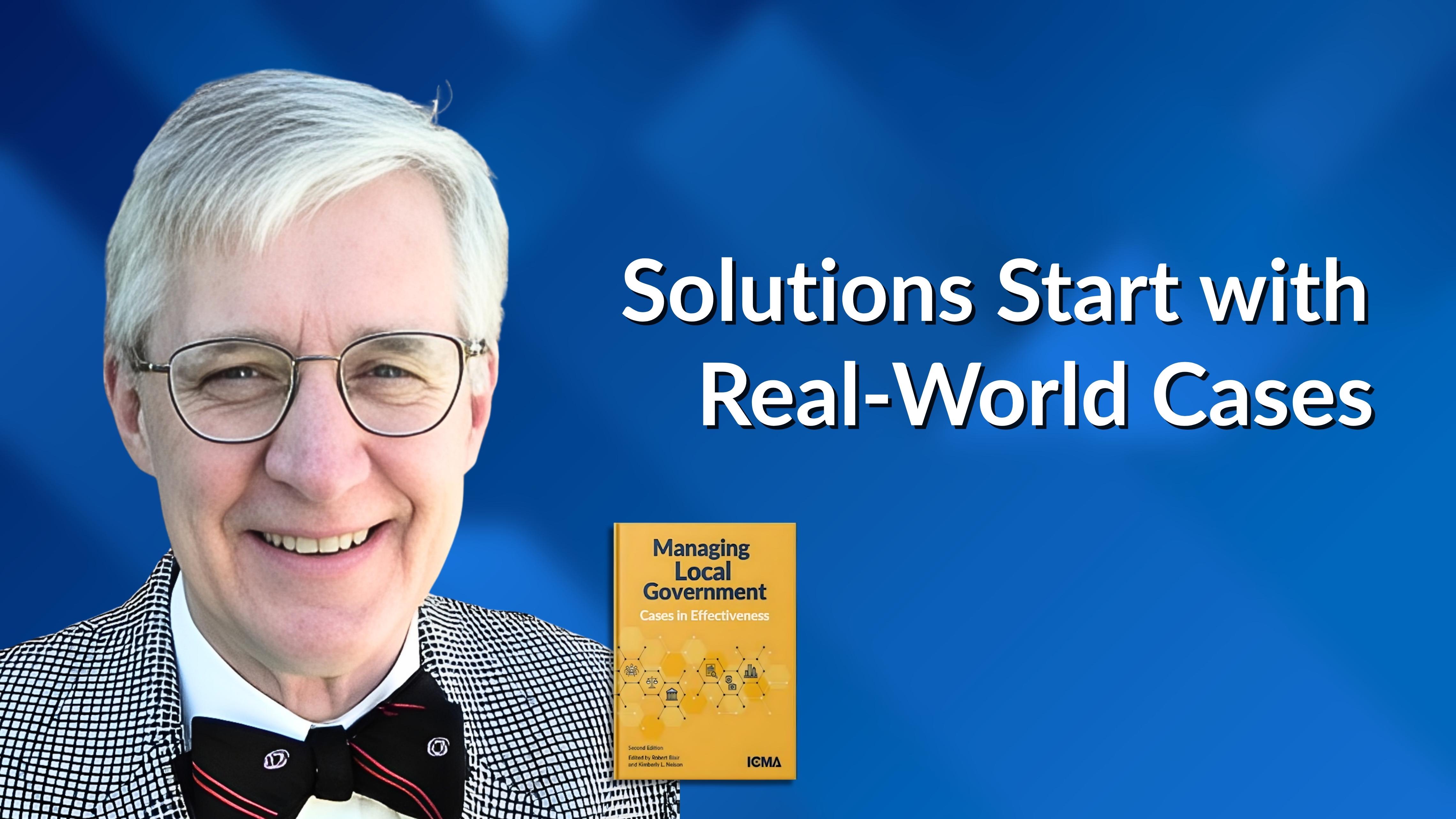
ICMA's recently released Managing Local Government: Cases in Effectiveness (Second Edition) brings together more than twenty real-world scenarios co-authored by practitioners and academics. These case studies illuminate both the complexities and the possibilities of public management today.
In a recent interview with ICMA, Dr. Blair, professor emeritus at the University of Nebraska at Omaha and co-editor of the book, reflected on why this edition matters.
Preparing the city management workforce is growing more urgent.
Blair remembers studying early ICMA case books when he was a graduate student. The themes were familiar. Finance. Budgeting. Personnel. Those topics still matter today. But the context around them has changed dramatically.
He sees a new set of pressures shaping local leadership and recruitment. Blair raises a concern shared by many leaders. "How are we going to get young men and women to be public servants, to go into this field?"
Studies from MissionSquare Research suggest that the local government profession may be on the precipice of a talent gap, especially in leadership positions. That means succession planning, training, and workforce education grow more urgent.
Case studies help managers think through real decisions.
Blair describes case studies simply. They show a real situation at a real decision point. But the reader must decide what to do next.
"We have to look at case studies as learning… where students and practitioners can learn from other people," he says. "It's not just reading about the cases, but what… can we learn from this case? What can we learn from the outcomes?"
Case discussions push learners to focus on:
- What information matters most.
- Which stakeholders are involved.
- What values guide the decision.
- How to communicate a choice under pressure.
Students gain practical insight. Early-career professionals build confidence. Experienced managers get a fresh tool to train staff or check their own assumptions.
Most importantly, case studies allow leaders to "learn from the outcomes" without risking real consequences.
An example case study shows what successful regional collaboration can look like.
One of Blair's examples highlights a merger between two suburban fire departments in neighboring jurisdictions. One department was fully staffed. The other relied on volunteers and struggled to maintain coverage. The two agencies decided to merge and reorganize their service area.
"They vastly improved fire protection for the whole area," Blair says.
The case is simple on the surface. But it reflects the real work of leadership: collaboration, resource sharing, service equity, and long-term planning. Leaders in other communities can learn from it. They can adapt the idea or use it as a prompt to rethink their own challenges.
And, as Blair notes, "These examples are not unique. They cut across many communities." That is the power of shared learning.
Case-based learning strengthens the future of the profession.
This conversation is not just about a book. It is about the future of local government and the people who will lead it. Managers today face higher stakes, greater public scrutiny, and more complex problems. Case-based learning gives them a practical way to prepare.
It helps students understand the reality of public management. It helps early-career staff build judgment before stepping into leadership. It helps department heads create meaningful development for their teams. It gives experienced managers a space to reflect and reset their decision-making habits.
Most of all, it offers guidance grounded in values. Blair explains it clearly. "When something like that comes up in your community, you can say, okay, here's the principles, and here's the code of ethics that can help address those issues."
Managing Local Government: Cases in Effectiveness (Second Edition) is available now in the ICMA Bookstore.
Publish with ICMA!
We’re searching for interesting and insightful stories that can help others learn a memorable takeaway to serve their communities better.
