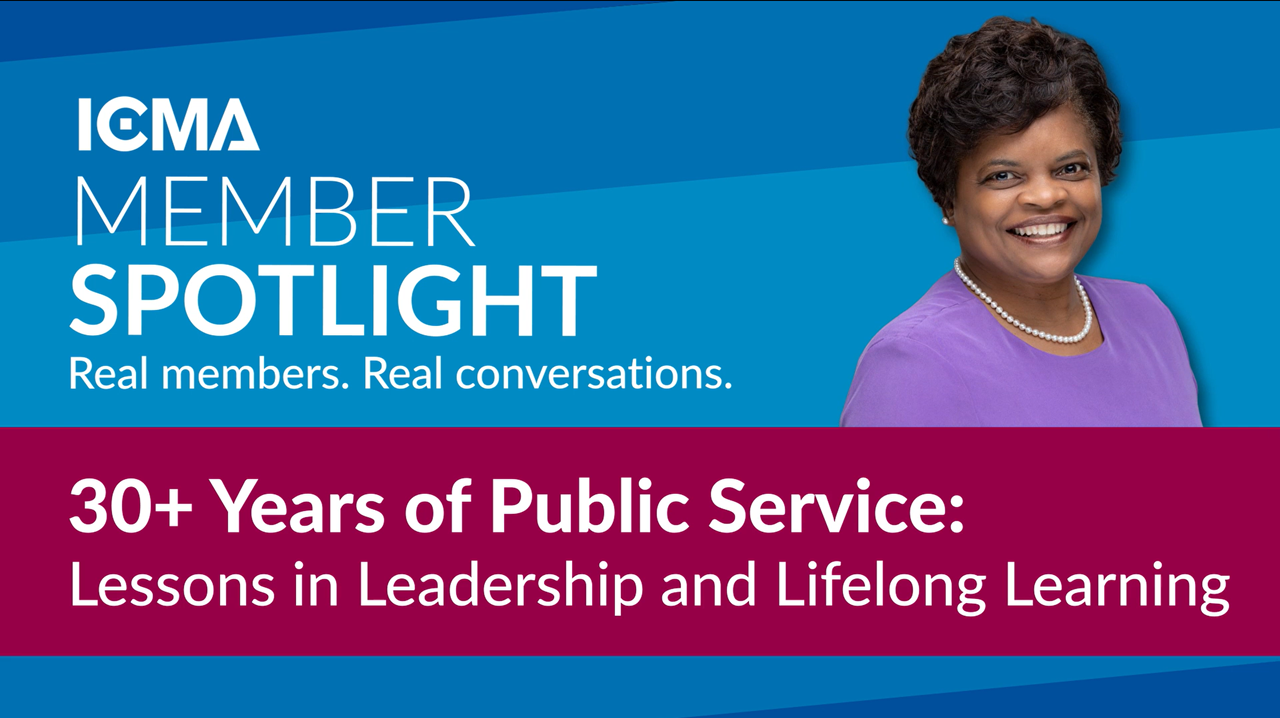
For Geraldine “Gerri” Pegues, a career in local government has always been about one thing: community.
She serves as assistant county administrator for human services with Montgomery County, Ohio, a role she eagerly embraced after spending more than three decades in public service. She began her career in 1992, as a college intern with the Montgomery County juvenile court. After completing her internship, she was offered a position—and stayed. “I wanted to serve my community. I saw my parents involved in my community as I grew up and I wanted to do the same.”
Over the course of her career, Pegues has held a variety of leadership positions in Montgomery County’s human services operations, which ultimately led her to becoming assistant county administrator. Today, she oversees approximately $305 million in funding and 1,150 staff supporting Montgomery County job and family services, including family stability, benefits eligibility, child welfare, child support enforcement, human services planning and development department (levy-supported and other human services programming), and the Stillwater Center (an Intermediate care facility for residents with severe and profound intellectual and physical disabilities).
For Pegues, her career progression has been intentional every step of the way. When opportunities arose, she evaluated whether they were the right fit both personally and professionally. “The answer had to be yes for both or I would pass,” she reflected.
That intentionality has been accompanied by a commitment to lifelong learning. Pegues describes herself as “a forever student of new things” and encourages local government professionals to embrace opportunities that challenge them and expose them to new perspectives. “I want to learn and grow versus being comfortable.”
People-Centered Leadership
After more than 30 years in public service, Pegues has developed a leadership philosophy grounded in respect, communication, courage, and authenticity. Her advice is straightforward: treat people with respect, listen before responding, stay true to your values, and remember that words matter. “Don’t be afraid to disagree with someone while respecting their views. Communication is key, especially when working with others, no matter how small or big the issue.”
Pegues also emphasizes the importance of being thoughtful about how leaders communicate through email and text, where tone and voice inflection can easily be lost. But above all, she believes leaders should have the courage to act on what they know needs to be done. “Lead with courage and your heart and all else will fall into place, well, with some planning.” That people-centered approach is particularly important in her current role, where the scale and complexity of the operation could easily become overwhelming.
For Pegues, the key is to surround herself with good people and stay focused on those the organization serves. “I have a great team, all of them are experts in their areas. We learn from each other.”
Effective leadership, she adds, means keeping residents at the forefront of every decision while supporting the growth and development of employees at every level. It also means empowering staff to make decisions, listening to employees and community members, and incorporating their perspectives into solutions. “You must lead by example, put people first, and be flexible.” And sometimes, she notes, effective leadership also requires a little humor and knowing when to step away and recharge.
Learning from Other Communities
Pegues’s commitment to learning and connecting with others has also shaped her experience with ICMA. She served on the 2026 ICMA Annual Conference education committee, an opportunity she jokingly describes as being “voluntold” to serve as the county administrator’s representative.
What began as an unexpected assignment has become rewarding. “It has turned out to be a great experience,” Pegues shared. “I enjoy meeting people and learning from them, bringing new ideas back to my community, and preventing any of the barriers or challenges others face, helping us to find alternative solutions.”
The conference education committee helps review proposals and select educational programming designed to support ICMA members’ learning and professional development. This year, nearly 1,000 proposals were submitted across three conferences. Committee members also serve as liaisons to presenters, help prepare for the conference, ensure information is submitted in a timely manner to the conference website, and provide support throughout the event.
Pegues credits ICMA’s planning team for making the process a positive one. “They have done a phenomenal job keeping us informed and moving the planning process forward. The communication has been clear and timely.”
Making Connections at the Conference
With her unique perspective as both a member of the committee and a local government leader, Pegues sees the ICMA Annual Conference as an opportunity to learn from professionals who may have faced similar challenges. “Someone has had a similar situation that you may be dealing with, and you can learn from their experience.”
Sessions at this year’s conference will address topics such as human services, housing, budgeting, workforce, and legislation, to name a few. But Pegues encourages attendees not to focus exclusively on the difficulties facing local governments. “While we acknowledge the challenges of today, we can’t get stuck; we must also lift up the good work happening across our country.”
She encourages attendees to step outside their existing networks and intentionally meet people from communities they may not otherwise encounter. “Come with a listening ear to discern what may be good to take back to your community. Build connections while at the conference so that when you return home and have questions, you have a network to reach out to.”
Ultimately, Pegues views the conference as an investment—not only in professional development, but in the community you serve. “Be ready for full days of expanding your educational knowledge, networking with others to make connections, exploring the community and other ideas, and having a little fun,” she encouraged. “I look at attending the conference as an investment in learning about other communities while sharing the great work of Montgomery County, Ohio.”
Join Pegues and thousands of local government professionals at the 2026 ICMA Annual Conference, October 17–21, in Long Beach/Los Angeles, County, California. The conference offers five days of learning, networking, and opportunities to discover ideas that can make a difference back home. Register today at conference.icma.org and be part of the conversation.
JESSI FINLEY is a marketing manager at ICMA.
Publish with ICMA!
We’re searching for interesting and insightful stories that can help others learn a memorable takeaway to serve their communities better.
