
“In Our Region” is PM’s new column written by ICMA’s regional directors. In this edition, Pat Martel, West Coast regional director and former ICMA president, revisited the book Healing the Heart of Democracy: The Courage to Create a Politics Worthy of the Human Spirit by Parker J. Palmer. The recently updated version provides an optimistic view of the critical role local government can play in meeting what may feel like insurmountable challenges.
As a reminder to ICMA Credentialed Managers, you can receive 10 hours credit for each professional book that you read.
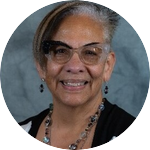
Pat Martel, West Coast Regional Director and Former ICMA President
What book did you choose to highlight and why?
Recently, I revisited the updated edition of Healing the Heart of Democracy by Parker J. Palmer. For the last few years, at regional conferences and other venues where local government leaders gathered to discuss challenges in the profession, overarching themes included partisanship, polarization, divisiveness, lack of civility, public trust, bridging the great divides, and the appropriate role for local government leaders in this fractured political climate.
Recognizing the importance of political neutrality, I found that this book offers hope and a positive path forward for those who care about democracy at the doorstep, engaging and building community, contributing to positive neighbor-to-neighbor and community dialogue, and who want to be part of the solution to healing the “broken heart” of our democracy.
How did the book encourage you to think more broadly or change your mind about an issue?
Palmer examines our “instincts to explore the common good by offering practical ways to bridge political divides” that make enemies of those who disagree with one another. These divides are affecting public discourse about what is right and wrong and who is right or wrong. They contribute to the weakening of the civic foundations of our communities and democracy.
Reflecting on the current political divides across the country and in our local communities, Palmer reminds us that throughout the history of our American experiment we have witnessed disruptive forces that have threatened our democracy. He offers historical context to illustrate this point. “Of the 55 delegates to the Constitutional Convention of 1787, only 39 signed the final document. The remaining 30% disagreed so deeply with one part or another of the Constitution they took a pass on posterity”—not unlike the contemporary dividing line we are witnessing today.
Despite those dissenting voices, “we the people” have sustained our American experiment through countless challenges in 250 years and continue to move forward with the aspiration of establishing a “more perfect union.” Yet somehow today the issues seem so intractable, affecting us at the core or “heart” of who we are individually and collectively because of our inability to view divisive issues through the lenses of those with whom we disagree, as well as our inability to better define the common good and establish common purpose. Enhancing understanding, if not acceptance, of political differences and the resulting conflicts they create can preserve the civic fabric of the community on which a healthy democracy relies.
What practical strategies from the book could be applied in local government?
The premise of Palmer’s book is that we all have the capacity to lead change at all levels, not simply in the political sense, but in the manner in which we interact with one another, create safe spaces for exchanging ideas, and see each other as collaborators despite our differences.
The “five habits of the heart” Palmer outlines are “deeply defined patterns of receiving, interpreting, and responding to experience that involve our intellects, emotions, self-images, and concepts of meaning and purpose.” Developing these habits in families, neighborhoods, educational institutions, faith organizations, and workplaces that make up the civic infrastructure of our communities can contribute to increased interpersonal understanding, community engagement, and the rebuilding of trust in our institutions and one another.
Citizens of a democracy can cultivate “democratic habits of the heart” by focusing on the habits that tend to be the weakest among us:
- An understanding that we’re all in this together.
- Appreciating the value of otherness or differences.
- Being able to tolerate tension in a positive way.
- Evolving our sense of personal voice and agency.
- Developing a greater capacity to create community.
Developing these habits through personal conversations and public discourse can help us begin to move the needle in empowering our residents to pursue the change that they desire for their communities, their country, and their democracy.
Did you find anything in the book that was particularly relevant to your region?
Many ICMA members on the West Coast are grappling with how to address the growing polarization in their communities without engaging in the partisan political fray. Several case studies in the book highlighted how public and civic organizations can create engagement, social bonding, and meaningful community dialogue leading to effective community building. Examples focused on the neighborhood level, recognizing that too often the strangers closest at hand are our neighbors.
Isolation experienced by neighbors can be harnessed for positive personal and community benefits. One such example involved a neighborhood association where residents deepened their social bonds by creating a “neighborhood resource catalog.” Neighbors were invited to submit descriptions of services they would be willing to contribute, which were then distributed in a printed catalog. The range of neighbor-to-neighbor services included pet sitting, visiting shut-ins, and minor home repairs. Services were time-limited and all entries in the catalog had a three-month life span, subject to renewal or expiration. A coalition of local faith congregations helped screen, publish, and monitor entries.
While individuals can contribute significantly to community building, local governments can play a role, too. For example, the city of Seattle established a “department of neighborhoods” whose mission is to bring government closer to the residents by “engaging them in civic participation; helping them to make positive contributions to their communities; and being inclusive of underrepresented residents in civic discourse, processes, and opportunities.” This story underscores the key role government plays in creating public policies to help drive civic engagement rather than waiting for civic engagement to help drive public policy.
KATE FITZPATRICK is ICMA’s northeast regional director (kfitzpatrick@icma.org).
Publish with ICMA!
We’re searching for interesting and insightful stories that can help others learn a memorable takeaway to serve their communities better.
