Housing affordability is no longer just a challenge for major cities. In Lower Merion Township, Pennsylvania, one of the Philadelphia region’s most desirable suburban communities, the gap between what homes cost and what households can afford is reshaping who can live and work in the community. These conditions raise a question that extends well beyond Lower Merion: How can local governments help preserve access to the communities they have worked so hard to build?
As the nation celebrates its 250th anniversary, that question takes on particular significance. The American Dream, the enduring belief that anyone should have the opportunity to build a stable life and choose where they live, depends in part on whether communities remain accessible to the people who want to call them home. While housing markets are shaped by regional and national forces, local governments are not powerless. Through zoning innovation, preservation strategies, targeted funding, and public-private partnerships, municipalities can expand housing opportunities and help ensure that affordability is not simply a market outcome, but a local policy priority.
Defining Affordability in a Local Context
Affordability, especially as it pertains to housing, is a term that is often thrown around with minimal context. The same is true about “attainable” housing. While related, these terms are not interchangeable; each describes a distinct segment of the housing market and serves different populations. Both are grounded in a region’s area median income (AMI), which represents an estimated midpoint of household earnings in a given area and serves as a common benchmark for what residents can reasonably afford.
Housing affordability is fundamentally defined by cost burden rather than a fixed income band: a household is considered cost-burdened if it spends more than 30% of its income on housing. In practice, however, income-restricted affordable housing is typically targeted to households earning up to 80% of a region’s AMI, with rents or sale prices calibrated to remain within that 30% affordability threshold, often supported by public subsidies, incentives, or regulatory requirements.
Attainable, or moderate-income/workforce housing, by contrast, is defined by its income range. It generally serves households earning between 80 and 120% of the AMI. These households may not qualify for subsidized housing but still face affordability challenges in high-cost markets. While not always formally subsidized, these units are often priced or designed with the same 30% affordability benchmark in mind and are more commonly delivered through market-based or mixed-income development strategies.
Together, affordable and attainable housing form a continuum of housing affordability. One addresses the needs of lower-income households, while the other fills the gap for moderate-income residents who are increasingly priced out of the communities where they live and work. Understanding the distinction is critical for local governments seeking to craft policies that respond to the full spectrum of housing needs, rather than treating affordability as a one-size-fits-all challenge. For purposes of this article, the term affordability is used broadly to encompass both affordable and attainable housing, with distinctions noted where relevant.
The Growing Affordability Gap
Lower Merion Township’s 2025 housing needs assessment highlights a structural imbalance between supply and demand. Over the past decade, job growth (+18%) has significantly outpaced housing production (+6.5%), further constraining an already tight housing market.
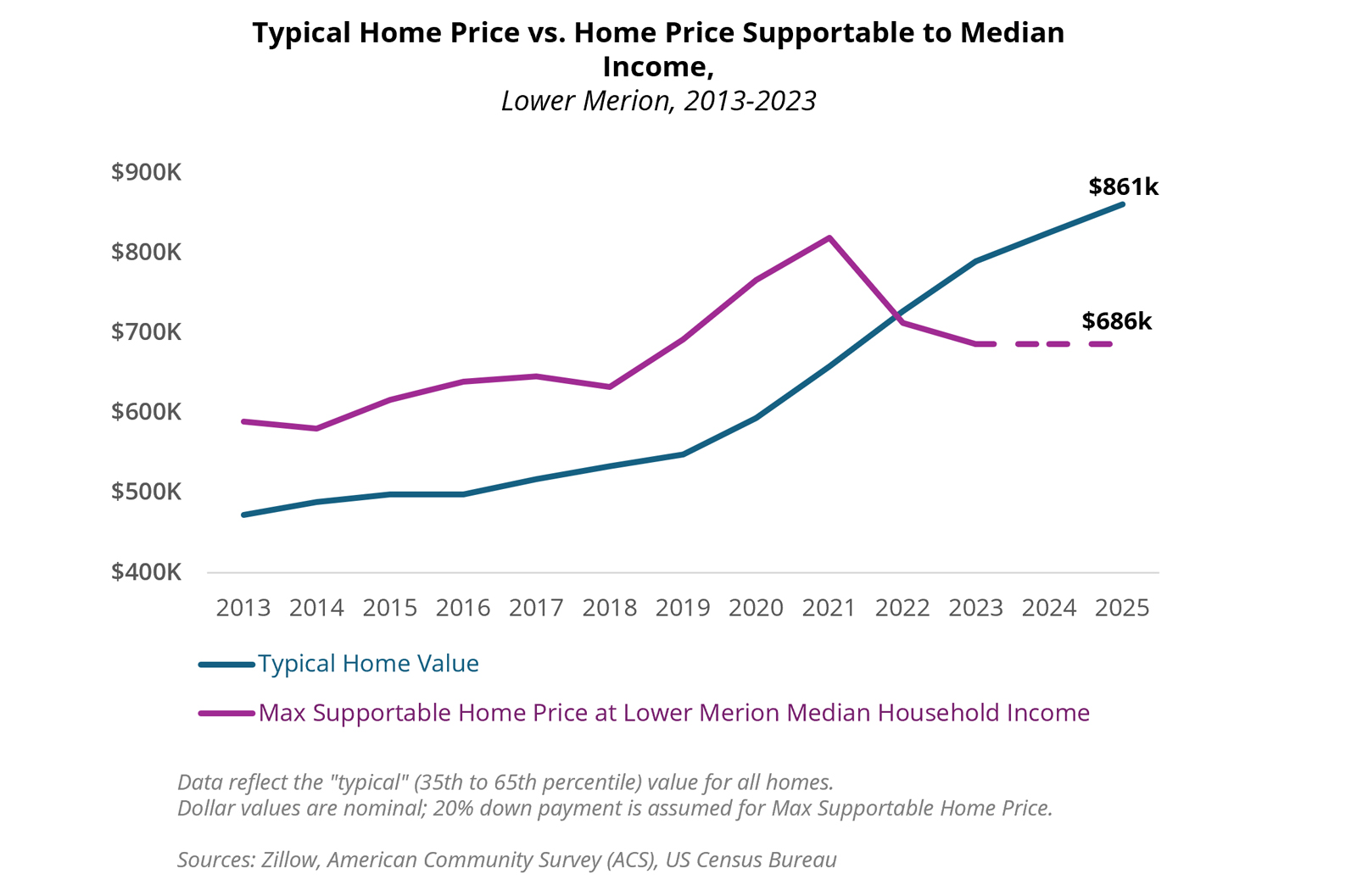
In 2019, the average home sale price in Lower Merion was $553,000 while a median income household could afford a home priced up to $690,000. By spring 2025, the typical home value had climbed to approximately $861,000, a 56% increase, while conversely the purchasing power of median-income households slightly decreased to $686,000. This divergence between income and cost has metaphorically closed the door to homeownership for many households, limiting opportunity within the township.
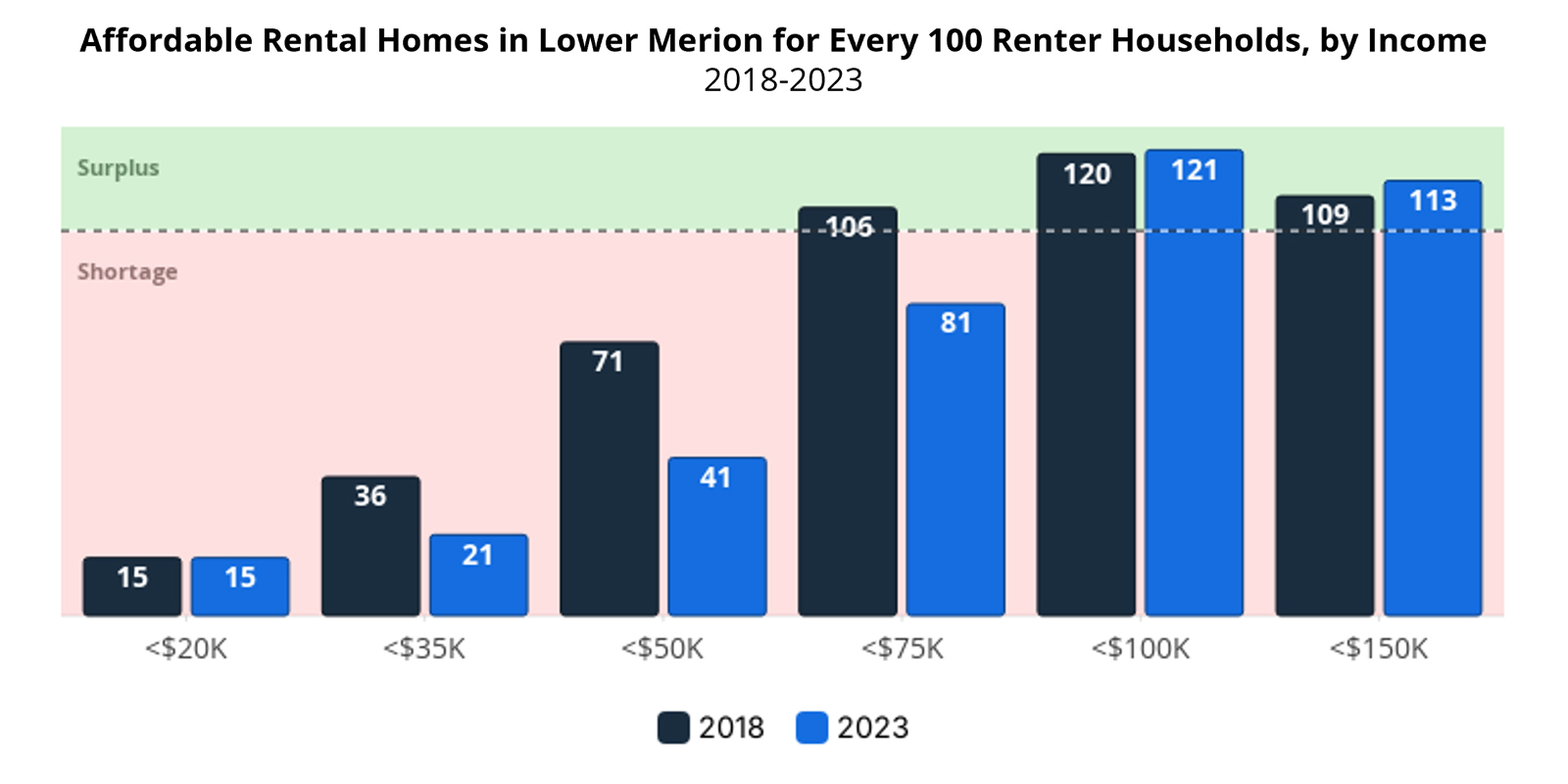
The rental market reflects similar pressures. With a vacancy rate averaging just 1.8%, well below the 5% generally considered healthy for local housing markets, renters face limited options and intense competition. This limited supply has driven rents up by more than 20% since 2018, further widening the gap between what households earn and what they can afford in housing costs. Consequently, nearly half of all renter households (48%) in the township are now cost-burdened. Vulnerable populations are particularly affected, including 71% of senior renters and 77% of single-parent households. Together, these market trends are reshaping the community. Essential workers, young families, and long-time residents, particularly those on fixed incomes, are finding it increasingly difficult to move into or remain in the township.
From National Challenge to Local Action
Lower Merion is not alone in experiencing these housing hardships. Rising home prices and limited options have altered the housing landscape across the nation, prompting professionals and elected officials to confront a crucial question: How can local government help restore access to a wider range of housing opportunities? Increasingly, communities of all sizes are recognizing that housing affordability is not just a market issue, but a core governance issue—one that affects economic competitiveness, workforce retention, and long-term community stability. Local governments are stepping beyond traditional roles and services in response to this growing challenge by supporting broader access to housing opportunities across varying income levels.
The township’s response begins with a simple but critical shift: treating housing affordability as a shared local responsibility. While housing markets are shaped by regional and national forces, Lower Merion has embraced an understanding that local governments play a decisive role through land use regulation, policy design, and facilitating partnerships. The township’s housing strategy is not defined by a single initiative, but by a coordinated set of tools designed to expand opportunity. This approach respects community context while acknowledging fiscal and operational limitations of smaller and mid-sized municipalities. Through zoning innovation, preservation efforts, and public-private partnerships, Lower Merion Township is advancing practical, locally driven solutions.
Zoning and Land Use Innovation
Zoning sits at the center of Lower Merion’s local housing strategy. Recognizing that conventional zoning patterns can constrain affordability through restrictive density limits and parking requirements, the township adopted a new zoning code in 2020 that prioritizes housing diversity.
The new code established the town center zoning districts (TC1 and TC2), which support medium-intensity mixed-use development areas along commercial corridors, main street business districts, and transit hubs. It also introduced a definition for moderate-income housing and then tied the provision to a height incentive in the TC1 District. Under this framework, developers can add an additional story to a building if they provide either five units or 20% of total units (whichever is greater) at 80–120% AMI. This incentive has already resulted in the creation of attainable housing units that would not otherwise have been delivered.
The zoning update also created a dedicated affordable housing fund. This local, flexible financing tool is supported by contributions from developers who opt to utilize the TC1 height incentive without providing the required number of moderate-income housing units. Since it was established, the fund has been used to further the township’s housing goals, including its 2025 housing assessment and action plan, and to provide gap funding for affordable housing developments like Ardmore House II, which we’ll discuss later.
Preservation of Existing Affordable Housing
While new housing construction is essential, Lower Merion also recognizes the importance of preserving naturally occurring affordable housing units (NOAHs). NOAHs are residential housing units that have remained affordable or attainable without the use of government subsidies, often due to age, condition, or smaller size. In many communities, NOAHs represent a significant share of the most affordable housing options available to low- and moderate-income households. However, NOAHs are increasingly vulnerable to reinvestment pressures. As property values rise, older properties are often purchased, renovated, and placed back on the market at higher price points, eventually eliminating their affordability.
Lower Merion’s approach to NOAHs recognizes the need to proactively preserve these units through targeted policies and programs. For years, the township has utilized a significant portion of its federal community development block grant (CDBG) funding to support housing rehabilitation efforts and the acquisition of NOAHs for resale to income-qualifying households. By offsetting the cost of extensive repairs and placing deed restrictions on homes acquired and sold to low- to moderate-income households, Lower Merion is able to preserve NOAHs and maintain affordability in a more cost-effective way compared to the pursuit of new construction.
Public-Private Partnerships: Ardmore House II
No single entity can address housing affordability alone. Public-private partnerships act as a central component of Lower Merion’s approach to affordability, enabling the township to leverage additional resources, gain in-depth expertise, and share risk in moving housing projects from concept to completion. The township has worked to build partnerships with nonprofit organizations, private developers, and institutional stakeholders to translate its housing policy goals into tangible outcomes.
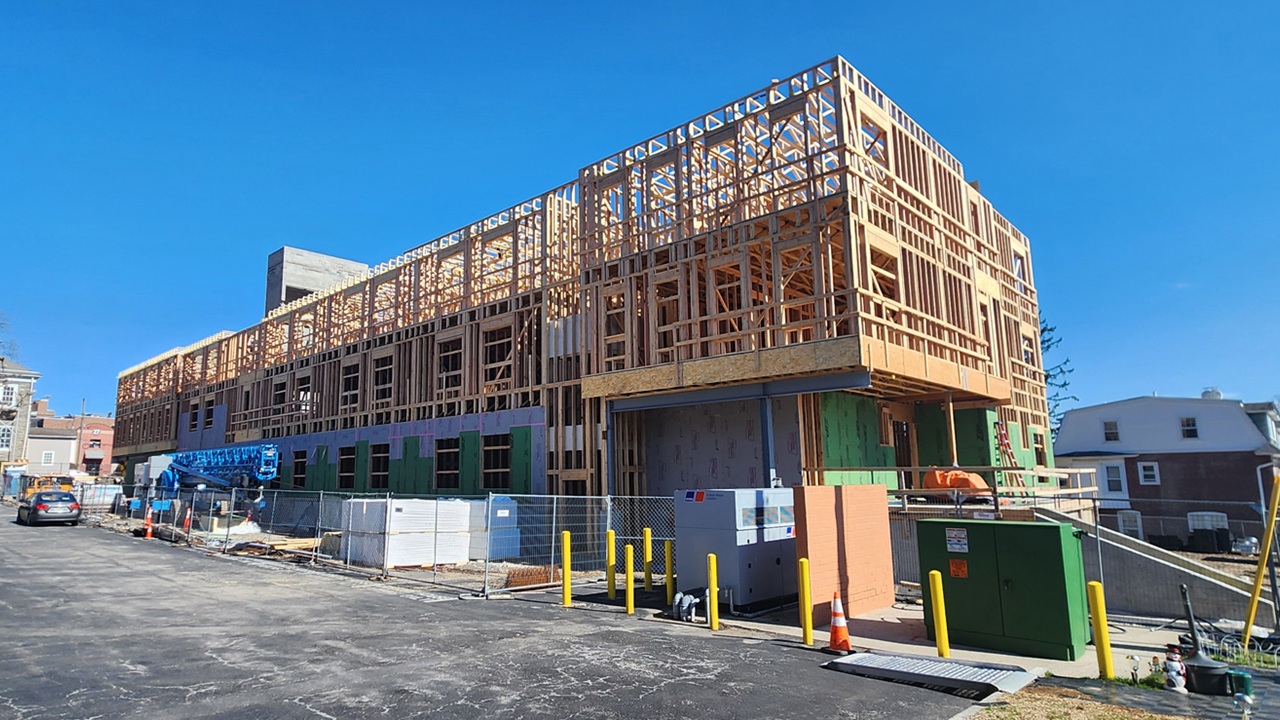
Ardmore House II, a low-income, multifamily senior housing development, stands as a leading example of this strategy. Developed in partnership with county and state officials, as well as a nonprofit housing developer, the project converts an underutilized, predominantly paved, township-owned parking lot into high-quality, affordable housing for seniors. Beyond the physical development, Ardmore House II reflects the value of alignment between public priorities and private execution. The township actively created conditions for success through planning, public engagement, and administrative support, while development partners brought the technical capacity and financing necessary to deliver the project. This shared approach enabled the creation of housing that meets a specific community need.
Where to Start: A Commitment to Local Action
Lower Merion’s experience offers several lessons for local governments impacted by affordability pressures or that seek to take a more proactive role in addressing housing challenges. Although shaped by the experience of a high-cost suburban community, these principles are broadly applicable to jurisdictions of all sizes working to expand housing opportunities:
Start with data and planning. A clear understanding of local market conditions and housing needs is essential to developing effective, targeted strategies.
Use a range of tools. No single policy or program will solve affordability challenges. Success requires a coordinated approach that combines innovative zoning incentives, strong partnerships, and viable funding tools.
Leverage partnerships. Collaboration with nonprofit organizations, private developers, and governmental partners expands capacity and creates pathways for implementation.
Balance production and preservation. Increasing housing supply is critical, but preserving existing affordable housing is equally important.
When local governments act as conveners and facilitators of housing affordability, they can unlock opportunities that might otherwise remain out of reach. In doing so, they reinforce a broader principle: restoring access to housing opportunities requires both vision and partnership. In Lower Merion Township, that effort is taking shape through deliberate planning, collaborative action, and a sustained commitment to expanding opportunity. By addressing housing affordability at the local level, Lower Merion’s experience shows how municipal managers can use limited tools in responding to complex challenges with practical, forward-looking solutions.
BRANDON FORD, ICMA-CM Candidate, is assistant township manager for Lower Merion Township, Pennsylvania, and ICMA Northeast regional vice president.
CHARLES DOYLE, AICP, is assistant director for planning for Lower Merion Township, Pennsylvania.
Publish with ICMA!
We’re searching for interesting and insightful stories that can help others learn a memorable takeaway to serve their communities better.
