This is the first of a four-part series covering how local government leaders are putting AI to practical use in New Zealand. Click for part two, part three, and part four.
Selwyn District Council is leading the way in aquatic safety innovation with its rollout of an AI-powered Drowning Prevention System across its community pools. The initiative reflects a growing trend among local authorities to integrate digital technologies that enhance safety, efficiency, and public trust. As the role of local government continues to evolve, Selwyn District Council’s approach to community safety shows that it’s not always about the latest technologies, in this case AI, but also about cross-departmental collaboration, community engagement, and public trust.
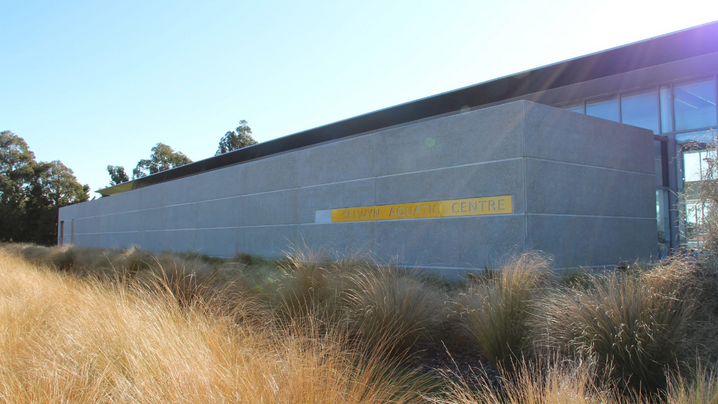
Selwyn Aquatic Centre sees over 530,000 visits per year, which makes it one of the busier recreational sites in New Zealand local governments. After a resident experienced two near-drowning incidents in close succession in 2023, Selwyn District Council’s Audit and Risk Committee recommended the implementation of a drowning detection system.
The project began in June 2024 with market research and site visits to Australian facilities already using similar systems. Selwyn saw the opportunity to be the first council in New Zealand to implement this state-of-the-art, life-saving technology. The project team consisted of staff from digital services, sport and recreation, and overall council operations. The cross-departmental team oversaw planning, procurement, and installation over a 6-month period. A pilot phase featuring six cameras in the main pool was launched in December 2024. Based on positive pilot results, the system was expanded to 27 cameras by mid-2025. The council is currently exploring expansion possibilities including more cameras, broader coverage, and deeper integration with recreation services to help improve community safety.
A key success factor has been staff engagement and training. Recreation center teams were involved early in the process, helping shape training modules and operational protocols. Lifeguards completed online and in-person training sessions, supported by a “train the trainer” approach to ensure sustainability. All new lifeguards now receive system induction training as part of onboarding.
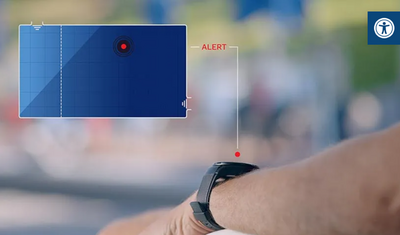
The technology serves as a second pair of eyes. Using advanced computer vision, it detects motionless swimmers beneath the surface and sends real-time alerts to lifeguards’ smartwatches and to a monitoring dashboard. This reinforces, rather than replaces, traditional observation and rescue methods. As one manager described it, “The system enhances our vigilance; it doesn’t automate it.”
Lifeguards have reported increased confidence and situational awareness since the system’s introduction. The AI alerts have prompted timely safety checks, with one notable example involving a swimmer practicing scuba techniques at the bottom of the pool. Although not an emergency, the system correctly identified unusual behavior, prompting a quick visual confirmation by staff. These instances underscore the technology’s reliability and its value in preventing potential incidents. Regular staff surveys show strong confidence in its value.
Privacy Concerns and Public Response
Rolling out an AI system in a public facility required careful navigation of privacy, procurement, and operational considerations. The council obtained an exemption to standard RFP processes due to procurement thresholds, ensuring project momentum without compromising oversight. Integrating the new cameras with existing infrastructure also required close coordination to avoid disrupting day-to-day pool operations.
Perhaps the most significant challenge was managing public and staff perceptions around AI and surveillance. Council staff proactively addressed these concerns through targeted communications, a detailed privacy impact assessment, and an independent cybersecurity audit. Legal reviews confirmed that the system complies fully with data protection and ethical standards.
As a result of these efforts, public response has been overwhelmingly positive. Many parents have expressed relief at the additional safety layer, and national media coverage helped the council communicate its purpose clearly. The emphasis on privacy was central to that acceptance: the system does not use facial recognition, stores no personally identifiable information, and automatically deletes footage after seven days. Recordings remain securely housed on-site and are inaccessible to staff.
Framing the technology as a safety tool, not surveillance, proved vital. Transparent communication, paired with independent validation of privacy and cybersecurity safeguards, built public confidence and demonstrated responsible innovation in action.
Monitoring Success and Continuing to Advance
The Drowning Prevention System is a cornerstone of Selwyn’s broader smart infrastructure strategy. It reflects the council’s commitment to using technology to create safer, more connected communities. In a region that spans both urban and rural areas, the system helps bridge that divide by delivering consistent safety standards across facilities (the urban and rural divide is also a challenge that the council foresees). It’s part of a larger vision to foster belonging and wellbeing through intelligent design. Steve Gibling, executive director, Strategy, Engagement, and Capability, Selwyn District Council, says it’s “just another way in which we're making our community a better place to live.” The council sees technology not as a replacement for human roles, but as a facilitator that enhances service delivery, supports planning, and evolves with the way we live in urban settings.
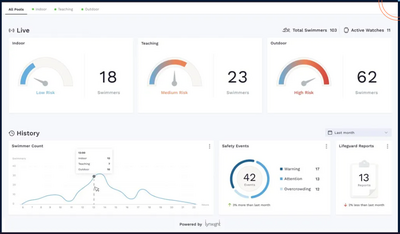
To ensure the system continues to deliver on its goals, the council tracks a range of performance metrics, including alert accuracy, lifeguard response times, staff feedback, system reliability, and customer satisfaction. These indicators are reviewed regularly and guide iterative improvements to both technology settings and operational practices. One big indicator of success is that no drowning incidents have occurred since the system’s implementation.
The system has attracted interest from other council’s and Selwyn’s journey offers practical insights for local governments adopting new technologies:
- Engage frontline staff early and maintain a feedback loop.
- Frame technology as a support tool, not a replacement.
- Prioritize privacy and cybersecurity from the start.
- Use existing infrastructure wherever possible.
- Pilot, evaluate, then scale.
- Communicate transparently and often.
Selwyn District Council’s Drowning Prevention System demonstrates how emerging technology, when grounded in ethical governance and staff engagement, can deliver tangible community benefits. “We believe it’s a game changer for aquatic safety,” said James Richmond, head of Sport and Recreation, Selwyn District Council.
Interested in learning more about the drowning prevention system? Watch a short video. If you'd like to connect with the Selwyn District Council team, contact ICMA staff at global@icma.org for information. View more ICMA resources on AI in local government.
Local Government Reimagined Conference - The AI Edge: Orlando, FL | April 8-10, 2026
What's actually working with AI in cities and counties like yours? Hear from practitioners navigating the pitfalls, finding the wins, and separating hype from reality.
Session Spotlights:
- Navigating the Ethics and Politics of Municipal AI: A Practitioner Roundtable
- Bridging Silos: How We Can Use AI to Unlock Smarter, Safer, and Healthier Communities
- Mobile Workshop: The Institute for Simulation and Training at the University of Central Florida. Learn More
Publish with ICMA!
We’re searching for interesting and insightful stories that can help others learn a memorable takeaway to serve their communities better.
