What happens when the rules change, but a community’s needs remain the same?
The toughest local government decisions rarely have easy answers. Funding, employee direction, and public reassurance may all be at stake as leaders balance legal obligations with community expectations.
Washington County, Oregon, faced that reality in 2025, when federal policy changes raised questions about equity-related programs and threatened continued access to $135 million in annual federal funding.
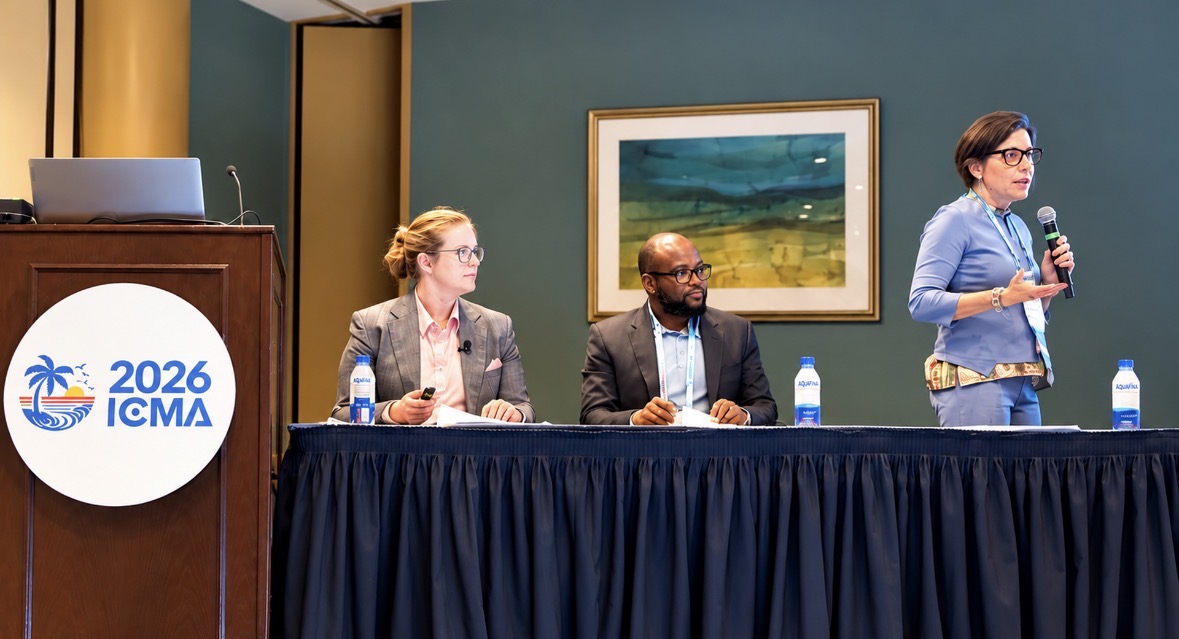
At the 2026 ICMA Annual Conference in Long Beach, California, Tanya Ange, ICMA-CM, county administrator for Washington County, joined Johnell Bell, president and CEO of Espousal Strategies, and Lucy Hamer, senior manager at Espousal Strategies, to explain how the county responded.
Their session, "Leadership Through Change: Aligning Values, Compliance, and Community Partnership," offered a broader lesson: Uncertainty may force difficult choices, but the strongest path forward keeps purpose at the center of the decision.
Finding a Way Forward
New federal directives created uncertainty around diversity, equity, and inclusion programs, while grant agreements required Washington County to assess its legal and financial exposure. At the same time, the county had an equity resolution developed with community input. Repealing it risked undermining years of collaboration and trust.
Leaders had to protect federal resources by supporting essential services while preserving the principles residents and partners expected the county to uphold, and they had little time.
With a federal grant deadline approaching, the county had 17 business days to engage stakeholders, draft a new resolution, and secure board approval. Rather than frame the challenge as a choice between compliance and community values, officials worked with Espousal Strategies to identify what must be preserved and how to express those priorities within a changing environment.
Before deciding what the new approach should look like, they needed to understand what employees, partners, and residents were experiencing.
Listening Changes the Conversation
The county began by listening. Employee sessions revealed uncertainty about changing requirements, acceptable language, and the effects on community partners. Bell described the “persistent uncertainty” employees faced as they tried to answer questions, support their teams, and navigate an unfamiliar regulatory environment.
Some feared losing their jobs. Others worried about residents and organizations depending on county services. An anonymous survey also revealed sharply different opinions: Some employees wanted strong equity commitments preserved, while others favored a narrower, compliance-focused approach.
The contrast reinforced a critical lesson: A single form of engagement produces only a single perspective.
Officials broadened the conversation through community-organization roundtables, individual meetings, and advisory-group discussions. Multiple channels revealed concerns about funding, services, and vulnerable residents.
They also revealed a willingness to help shape the solution. “When there is a problem, community will show up when they are asked,” Ange said.
The county’s community advisory group moved from monthly to weekly meetings to review drafts and provide feedback. Participation was not a box to check before making a decision; it informed the work as it evolved, turning a compressed timeline into a collaborative effort.
Reframing Without Retreating
Language became central to the response. How could Washington County reaffirm its commitments while meeting federal requirements?
The answer was a shift toward access and opportunity, grounded in civil rights protections including Title VI of the Civil Rights Act and the Americans with Disabilities Act. Officials connected the county’s approach to legal responsibilities and its obligation to serve residents fairly.
The resulting Access and Opportunity Resolution and Order linked those principles with established legal obligations. Hamer emphasized that reframing requires more than different words. Changing terminology without addressing underlying concerns would do little to build confidence. People needed to see their experiences and priorities reflected in the result.
The county shared outreach findings, incorporated feedback, and worked closely with elected officials. Following board work sessions and accelerated engagement, the Washington County Board of Commissioners unanimously adopted the resolution on July 22, 2025.
Adoption was a milestone, not the finish line. The harder test was whether the resolution would shape daily decisions, communications, and services.
The Work Begins After the Vote
A resolution can establish direction. Putting it into practice gives that direction weight.
Washington County developed guidance on federal grants, contracts, and language to help employees and community organizations navigate changing requirements. It addressed concerns raised during engagement, clarified communication with residents and partners, and drew interest from neighboring jurisdictions.
Employees who had asked for clarity now had tools to interpret and apply the county’s approach. The work continues through communication, participation, and accountability. As Hamer explained, the engagement process “established a foundation for continued accountability.”
The experience also challenges the assumption that meaningful public participation always requires months. Washington County moved quickly because it had already invested in relationships and infrastructure that enabled people to come together when the stakes were high.
The county did not build trust in 17 business days. It drew on trust built long before the deadline arrived.
Trust Is Built Before It Is Tested
Local governments cannot anticipate every policy shift, funding threat, or emerging challenge. They can prepare for uncertainty by investing in credible partnerships, candid dialogue, clear communication, and meaningful opportunities for people to influence decisions affecting them.
That work requires courage: hearing uncomfortable truths, acknowledging competing viewpoints, and recognizing that public trust depends on more than good intentions. Trust grows when people can see how their input shapes decisions and whether leaders follow through afterward.
The speakers captured that responsibility in a simple message: Governance is a relationship, not a transaction.
Policies may change and circumstances may shift, but relationships built before a crisis can determine how well an organization responds when one arrives. The willingness to listen, act, and follow through remains at the heart of effective local government.

Follow ICMAtv to see more from the 2026 ICMA Annual Conference!
Publish with ICMA!
We’re searching for interesting and insightful stories that can help others learn a memorable takeaway to serve their communities better.
