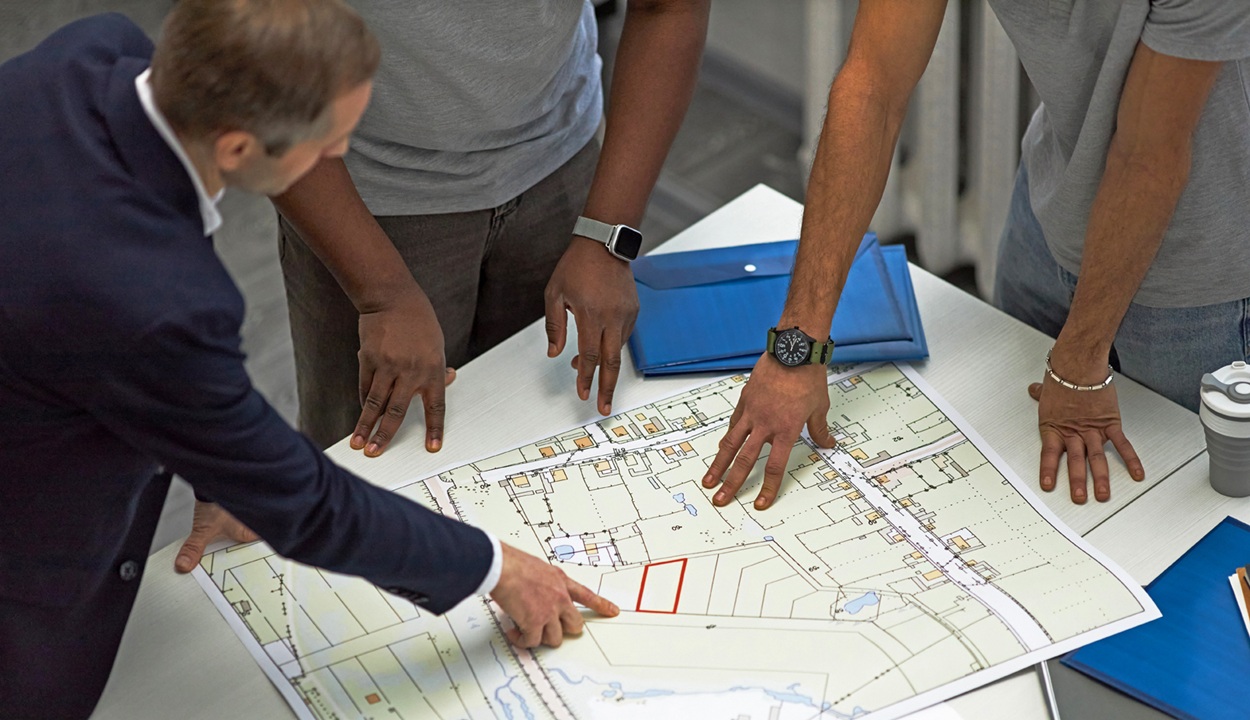
A developer walks into a pre-application meeting with a project that does not meet zoning. Not a little off. Significantly off. And before anyone says a word, everyone in the room already knows how the conversation is going to go.
From the developer’s side, the numbers only work at a certain scale. Cut too many units and the project does not move forward. It’s that simple.
From the city’s side, the question is not just whether the project works financially. It’s whether it works for the community long term. Infrastructure, traffic, and consistency with adopted plans all come into play.
We often talk about this type of situation as if something is broken. As if cities and developers are working against each other. In reality, this is exactly how the system is supposed to work.
The Development Motivation Gap
There is a gap in how cities and developers approach growth. Not in whether they want it, but in how they define success.
Developers are driven by financial feasibility. If the numbers don’t work, the project doesn’t happen. Cities are responsible for the bigger picture. They have to think about infrastructure, long-term planning, and the cumulative impact of growth over time.
Both sides want development, but they are solving different problems. Most of the friction we see in the development process comes from this gap.
Developer Motivation: What Has to Work
Development decisions live or die on a spreadsheet. Every project has a point where it becomes viable. Land costs, construction pricing, interest rates, and expected return all factor in. Small changes can have outsized impacts.
One of the most common misunderstandings is how sensitive projects are to scale. Removing even a handful of units can be enough to make a project fall apart financially. What looks like a minor adjustment from the outside can be the difference between moving forward and walking away.
Time matters just as much. Delays increase carrying costs, create uncertainty, and affect financing. From a developer’s perspective, predictability is not a luxury. It’s part of making the project work.
Requests for more density or flexibility are often framed as maximizing profit. In many cases, they are about making the project possible at all.
City Motivation: Thinking Past the Project
Cities are asking a different set of questions. A project might work financially and still create long-term issues. Roads, utilities, stormwater systems, and public services all have limits. One project may not strain those systems, but repeated decisions over time will.
Zoning and development standards are not arbitrary. They reflect past decisions about how a community wants to grow. They are one of the few tools that cities have to manage that growth intentionally.
There is also public accountability. Cities are responsible to residents who expect growth to be managed in a way that protects quality of life.
This is why cities can feel slow or overly cautious. They are not just reviewing a single project. They are thinking about what happens if the same decision is made over and over again.
Where the Tension Shows Up
This gap becomes most visible during project review. Density is a common pressure point. Developers may need more units to make the numbers work. Cities may be working within limits that reflect infrastructure capacity or community expectations.
Infrastructure requirements create similar friction. What is necessary from a city perspective can significantly impact project cost from a developer’s side. Design standards can also pull in different directions. What improves long-term outcomes for a community can reduce efficiency or increase cost for a project.
In many cases, these conversations happen before a formal application is ever submitted, when both sides are trying to understand what is possible within the constraints they each face.
Cities are often accused of slowing down development. Developers are often accused of prioritizing profit over community. Both critiques miss the point. Each side is doing exactly what it’s supposed to do.
The Tension Is the System
It’s easy to assume this tension is something to fix. It’s not. Without development pressure, cities can become overly restrictive and limit growth that communities need. Investment, housing, and redevelopment don’t happen without developers willing to take on risk.
Without municipal oversight, development decisions could prioritize short-term outcomes without fully accounting for long-term impacts.
The tension between these two perspectives is what creates balance, and the goal should not be to disrupt that balance but to understand it. The problem is not that the tension exists. The problem is that we often misunderstand why it exists.
Bridging the Gap
If the motivations are different, the process has to acknowledge that. Predictability is one of the most important pieces. Clear standards and consistent processes reduce uncertainty and help developers understand expectations early.
Early conversations matter. When developers and city staff can talk through a concept before it is fully designed, it’s easier to identify issues and adjust direction.
There is also value in roles that sit between these perspectives. In many communities, development facilitators help translate between financial realities and regulatory requirements. That role is less about making decisions and more about helping both sides understand what the other is working within.
Transparency is key. When developers understand the reasoning behind requirements, and cities understand the financial impact of decisions, the conversation changes.
Rethinking the Narrative
We tend to talk about development as a conflict between two sides. That framing is too simple. Cities and developers are not working against each other. They are working within the same system, just with different responsibilities.
Developers bring capital and execution. Cities provide structure and long-term accountability. When that is understood, the conversation shifts. It becomes less about winning and more about finding a path forward.
Conclusion
Most development debates focus on the visible disagreement. A project asks for something beyond what is allowed. The city pushes back. The developer pushes forward.
What is less visible is that both sides are responding to the constraints they operate under. Developers are trying to make projects viable. Cities are trying to make growth sustainable. Both are necessary.
The goal is not to eliminate the tension between them. The goal is to understand it well enough to work through it. Because that tension is not what stops good development. It’s what shapes it.
© Samantha Payne
SAMANTHA PAYNE is the project development facilitator for the city manager’s office of Springfield, Missouri.
Publish with ICMA!
We’re searching for interesting and insightful stories that can help others learn a memorable takeaway to serve their communities better.
