What makes a great leader? Is it the ability to make difficult decisions, navigate complex challenges, or have all the answers?
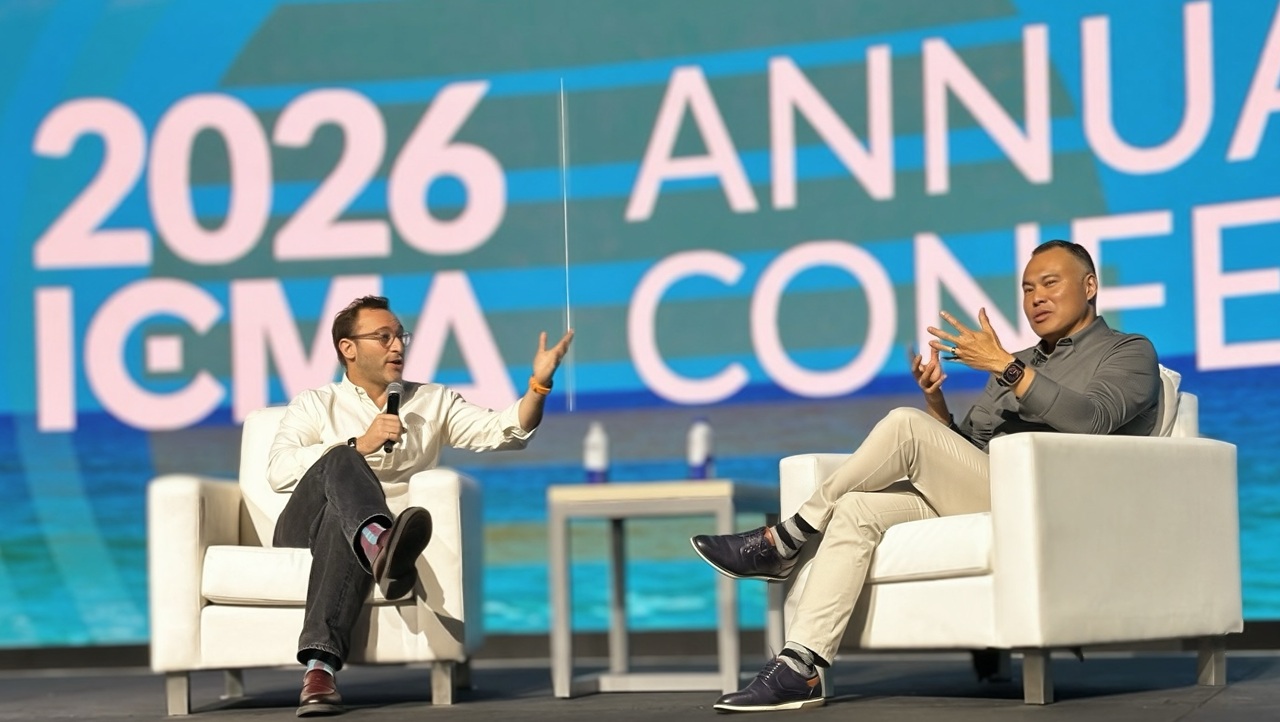
At the opening general session of the 2026 ICMA Annual Conference, sponsored by MissionSquare, leadership expert and author Simon Sinek challenged local government leaders to look beyond traditional measures of leadership and focus on the human relationships and organizational cultures that make effective public service possible.
During Leading with Purpose: Creating an Inspirational Culture in City and County Government, Sinek joined moderator Chris Hsiung, retired police chief and executive director of The Curve, for a fireside chat on how local government leaders can build workplaces where employees feel safe, valued, and empowered to do their best work through trust, intentional communication, and a shared sense of purpose.
Leadership Is a Skill, Not Just a Promotion
Local governments frequently promote employees because they excel at their current jobs. Yet technical expertise and strong individual performance do not automatically translate into effective leadership. Sinek argued that organizations often promote high performers without preparing them for the fundamentally different responsibilities of leading people.
“We would never ever give someone a badge and a gun without going through effective training, and yet, we put people in leadership positions with no [leadership] training.”
For local government managers, this is an opportunity to rethink leadership development at every level. Beyond policies and technical competencies, training should equip supervisors with the interpersonal skills needed to build strong teams and foster a culture of trust.
Sinek identified listening, navigating difficult conversations, and giving and receiving feedback as essential, teachable skills. He also emphasized that effective communication requires understanding how individual employees receive information. Small adjustments, such as asking whether someone is ready for feedback or would prefer to schedule a conversation for a later time, can help leaders communicate more effectively and avoid unnecessary conflict.
Build a Culture by Design, Not by Default
Equipping leaders with strong interpersonal skills is only part of the equation; they must also foster an organizational culture shaped by more than just formal policies and procedures. While policies establish expectations, leaders’ everyday decisions and behaviors determine how employees experience their workplace. Sinek explained that cultures lacking trust can develop when employees like their colleagues but do not trust them enough to ask for help, acknowledge mistakes, or discuss challenges. Without that trust, employees may conceal problems rather than work together to solve them.
Creating a healthier culture requires psychological safety: an environment where people can acknowledge uncertainty, seek support, and raise concerns without fearing that doing so will undermine their credibility. That begins at the top. Sinek encouraged leaders to “model the behaviors that they want to see” by acknowledging when they make mistakes, need assistance, or have more to learn. Rather than weakening their authority, this behavior can give employees permission to be honest about their own challenges.
“If we create a culture where you have to pretend that you're strong every day, things will break.”
Make People Feel Heard
Building a culture of trust requires more than modeling the right behaviors. Leaders must also ensure that employees—and residents—feel heard. Sinek distinguished between simply listening to someone's words and making that person feel genuinely heard. Effective listening requires leaders to give someone their attention, reflect their concerns, and ensure the person feels understood before moving immediately to explanations or solutions.
This distinction has practical implications for both internal management and community engagement. Employees who believe their ideas are routinely dismissed may stop offering suggestions. Residents who feel ignored may become increasingly frustrated, even when government officials have valid explanations for their decisions.
Sinek encouraged leaders to resist the impulse to immediately correct, defend, or solve a problem when someone raises a concern. Sometimes, the first responsibility is to listen and acknowledge the person's perspective, and that does not require agreeing with every request or changing every decision. Rather, it creates an opportunity for more productive conversations to take place.
Communicate the “Why” Behind Decisions
Listening helps leaders understand the concerns of employees and residents. Explaining the reasoning behind decisions helps them understand the choices being made. Local government leaders constantly navigate competing priorities, limited resources, and community needs, and even reasonable decisions can bring resistance when people don't understand the purpose behind them.
Sinek explained that communicating purpose means going beyond announcing what a department is doing to explain why the work matters and how it contributes to broader community outcomes. This does not depend on charisma or a larger-than-life personality. Rather, leaders simply need to convey genuine conviction in the purpose behind their decisions. Even when employees and residents disagree with a decision, understanding the reasoning behind it can foster trust and make productive dialogue possible.
Show Progress and Measure What Matters
Communicating a clear purpose is only the beginning. Leaders must also demonstrate that their commitments are translating into meaningful action and results. Sinek cautioned that announcing ambitious goals without sharing updates can undermine momentum and trust. He encouraged leaders to communicate progress before an initiative is complete, explain which priorities are receiving attention, and be transparent when timelines or priorities change.
“People need to feel the progress, not just wait for the conclusion.”
That transparency should extend to how organizations measure success. Local governments rely on performance metrics to monitor progress, demonstrate accountability, and guide resource allocation. However, Sinek cautioned against allowing metrics to become the purpose of the work rather than the tools for achieving it.
He challenged leaders to consider whether their organizations reward activity or meaningful results. For example, a police department might evaluate performance by the number of citations issued. But if the goal is to reduce traffic injuries and fatalities, addressing a dangerous intersection through infrastructure improvements and collaboration with transportation partners may be more effective than giving additional tickets.
This distinction applies across local government. Counting activities shows how much work an organization performs, while measuring meaningful outcomes that can be proudly shared with the community reveals whether that work is achieving its intended purpose. Sinek reinforced the importance of keeping metrics in perspective: “Numbers are important, but they come second. They are the result of good leadership. They're not the purpose of leadership.”
Leadership Is a Journey, Not a Destination
Throughout the fireside chat, Sinek returned to the idea that leadership requires continuous learning. Even experienced leaders make mistakes, misread situations, and discover new ways to support their teams. He encouraged leaders to be open about their development rather than feel compelled to project expertise at all times.
“There is no such thing as an expert in leadership, only students of leadership.”
That mindset has implications for recruitment, promotion, and professional development across local government. Organizations should consider not only candidates' experience and technical qualifications but also their values, ability to build relationships, and commitment to learning how to lead.
The impact extends beyond an individual manager. Leaders influence the people they supervise, who may eventually become leaders themselves. The culture established today can shape how future generations of public servants approach their work. Sinek emphasized the potential influence of the attendees in the room:
“The impact from this room simply based on who you hire and how you teach them to lead could profoundly change the course of this nation, if not the world.”
For local government professionals, the challenge is to put these lessons into practice: listen intentionally, invest in leadership development, communicate purpose, invite employees into the problem-solving process, and measure success by its impact on the community. Ultimately, great leadership is not about having all the answers. It's about creating a culture where people can learn, contribute, and work together toward a shared purpose.

Follow along with ICMAtv to see more from the 2026 ICMA Annual Conference!
Publish with ICMA!
We’re searching for interesting and insightful stories that can help others learn a memorable takeaway to serve their communities better.
