Influence in the public sector isn’t always defined by title or authority. Many times, it’s shaped by how leaders communicate, build trust, and show up in the moments that matter most. For women in government, that often means navigating complex expectations while finding ways to be collaborative, visible, strategic, and authentic. The ability to clearly articulate impact, connect work to purpose, and lead with intention has become just as critical as delivering results.
Across the public sector, a shift is underway. It’s no longer about simply doing the work. The shift requires rethinking how we approach self-advocacy, how we tailor messages for different audiences, and how we bring our full identities into leadership spaces. It also means recognizing that influence is not reserved for formal authority; it is built through relationships, empathy, and consistent, purposeful communication. The lessons that follow explore how women leaders are strengthening their influence every day through clarity, confidence, and a commitment to leading with impact.
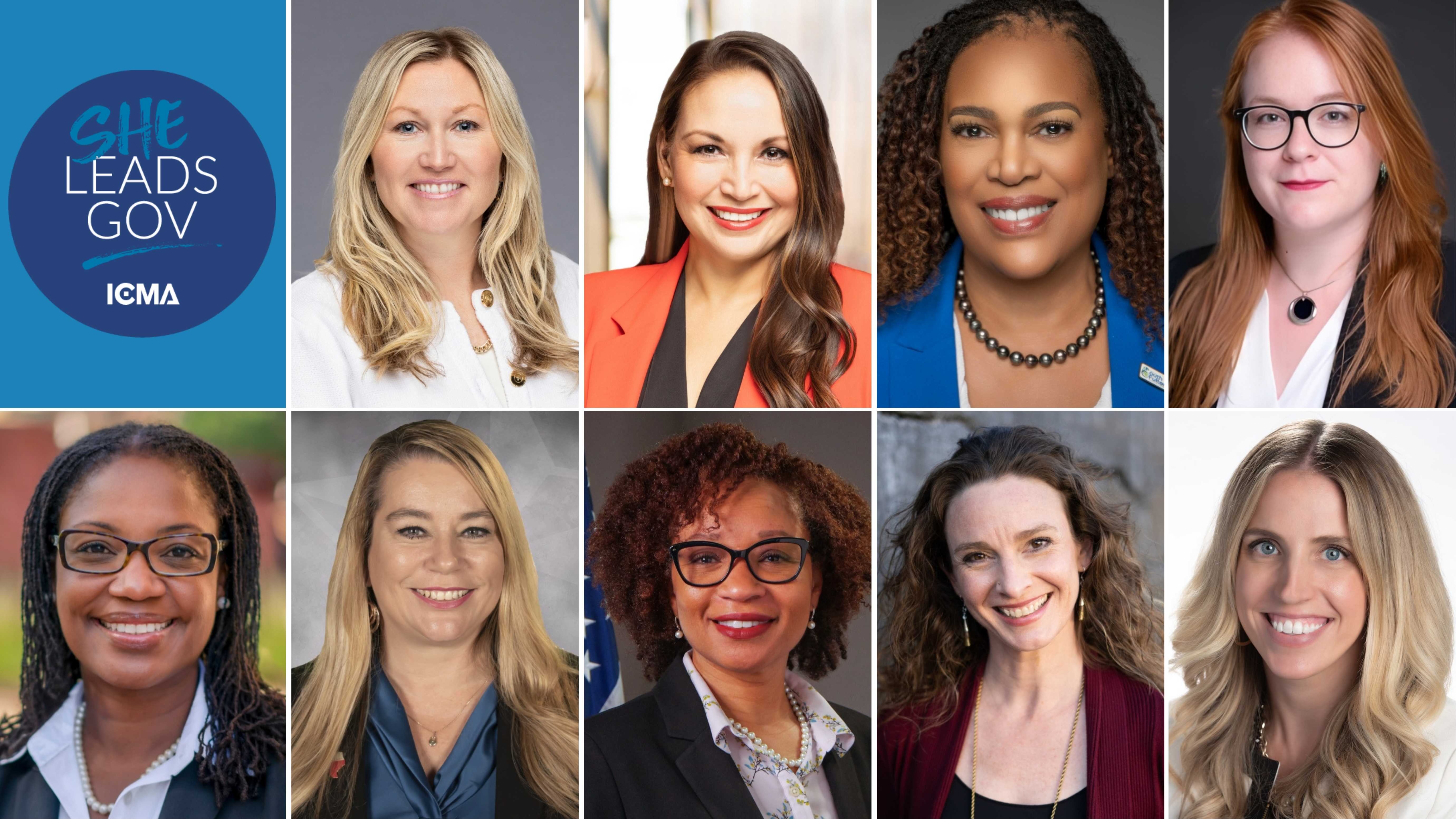
The 2026 SheLeadsGov Virtual Summit convened global local government professionals for a timely and energizing conversation about leadership, visibility, and impact. Organized by ICMA’s SheLeadsGov Committee and sponsored by Cigna Healthcare, the summit marked its sixth year with a clear and compelling theme: “Own Your Local Government Influence.”
Set against a backdrop of increased challenges in local government stemming from tight budgets, rising community expectations, and today’s complex civic landscape, this year’s summit focused on equipping women leaders with practical tools to navigate leadership while staying grounded in the values of public service. Across three panels, participants explored self-advocacy, communication, and leadership through change. These topics resonated deeply with attendees at every stage of their careers.
Reframing Self-Advocacy by Moving from Discomfort to Responsibility
The panel “Brag Better at Every Level in Local Government: Strategic Self-Advocacy That Feels Authentic” sought to address misconceptions about self-advocacy and provide best practices for executing it well. Audience polling revealed that most participants felt some level of discomfort or ambivalence about self-promotion. As local government employees, most participants are faced with situations that prioritize teamwork and serving residents.
Panelists spoke about reframing self-advocacy as a core leadership responsibility rather than a personal indulgence. Communicating impact, they argued, is essential not only for individual growth but also for organizational transparency and public trust. By grounding conversations in public service values such as stewardship, collaboration, and impact, leaders can speak confidently about their work without feeling overly self-promotional.
Instead of framing it as “bragging,” effective self-advocacy was described as:
- Clarifying impact so stakeholders understand outcomes.
- Connecting work to community value.
- Ensuring visibility of achievements.
Betsy Keller, chief administrator, El Paso County, Texas, illustrated this approach by explaining how she told the success story of El Paso County’s master parks plan. She emphasized community input, funding support, team contributions, and measurable results, communicating both organizational success and her leadership role in the process while also adhering to local government practices of openness and accountability that residents expect. Making success visible demonstrates progress in the community, which is important for local government leaders.
Panelists shared a range of strategies for building visibility organically including letting others tell the story through reports, presentations, and community engagement; highlighting team achievements; participating actively in professional networks and committees; and sharing lessons learned across jurisdictions and organizations.
Owning Impact in Critical Moments
While collaboration is foundational to public service, the panel underscored that there are moments when leaders must explicitly own their contributions.
Audience polling revealed that participants found self-advocacy particularly challenging in situations such as applying for promotions, networking, performance evaluations, and public presentations. Panelists emphasized that these are precisely the moments where clarity about one’s role and impact is essential.
One practical strategy that resonated strongly was maintaining a running list of accomplishments. This record allows leaders to:
- Reflect on their contributions over time.
- Prepare effectively for evaluations or interviews.
- Articulate their leadership role within team successes.
When leaders see their contributions as directly tied to community outcomes, the distinction between “my work” and “our work” becomes less rigid. Equally important is learning how to balance “we” and “I” language. While it is important to recognize team contributions, leaders must also be able to indicate individual responsibilities and accomplishments.
The Role of Relationships and Networks
Panelists shared how professional networks—mentors, peers, and colleagues—can provide:
- Early warnings about organizational changes.
- Career opportunities.
- Support and guidance during transitions.
Amanda Serock, township manager, Concord Township, Pennsylvania, noted that her experience actively participating on committees, whether through ICMA or other local groups, has helped her build her network and share her accomplishments while also learning from others. Jessica Whitley, assistant to the borough manager, State College, Pennsylvania, noted that her participation in ICMA’s Local Government Management Fellowship program allowed her to showcase how her background in fine arts could contribute to arts and culture in local government.
These stories reinforced a key message: relationships create opportunities, but self-advocacy activates them.
Sharing stories of resilience on the leadership journey
One of the most impactful aspects of the summit was the willingness of panelists to share personal stories of resilience. In response to a question about accomplishments they rarely discuss, speakers reflected on deeply personal journeys—overcoming adversity, navigating difficult life circumstances, and persisting through challenges while building successful careers. These stories highlighted the nonlinear nature of leadership paths while noting the strength required to balance personal and professional demands and the importance of sharing experiences to inspire others.
Another key takeaway from those stories is that vulnerability and strength are not opposing traits, but complementary ones. The speakers illustrated how perseverance in their personal lives has strengthened their professional leadership, equipping them to lead with authenticity, resilience, and impact.
Best Practices in Communication
Discussing best practices in strategic communication, the panel “Command the Message: Strategic Communication for Women in Leadership” emphasized that effective leadership begins with owning and shaping the narrative.
Sharon Subadan, city manager, South Fulton, Georgia, noted, “When shaping the message, I think it’s important to approach with a strategy first mindset. I’m asking, what is the outcome we’re driving? Who needs to hear this? How will they interpret it? Leaders have to be intrinsically aware–not just what you say–how you say it, when you say it, and why you say it that can define your leadership.”
Strategic communication was framed not as a technical function, but as a core leadership discipline that connects policy to community impact and builds trust both internally and externally. Speakers also underscored that for women leaders in particular, perception often precedes performance, making it critical to communicate intentionally, consistently, and with confidence. Beyond clarity, communication was described as a source of resilience and inspiration—especially in challenging moments—where leaders must rally teams and communities around shared purpose and hope.
Effective communication begins with understanding who the audience is, what they need to hear, and how they will interpret it, followed by clearly articulating goals and limiting key points to ensure retention.
Susana Carbajal, assistant city manager, Austin, Texas, explained that it is important to understand your audience and to be clear about what you communicate. She recommended not going beyond three points in a message as it can be hard for people to focus on more than that.
Leaders were encouraged to think beyond just what they say, focusing equally on timing, tone, and intent. The discussion also highlighted the need to adapt messaging across different stakeholders—elected officials, staff, and the public—while maintaining a consistent core message.
Heather Strickland, senior director of communications, Department of Health and Human Services, North Carolina, noted the importance of the voice of the organization. She outlined some key questions to consider.
- What do we want it [the voice] to be?
- How do we want to be remembered?
- How are we making sure that we are people-centered?
- How are people benefiting from the work we are doing?
Equally important was navigating the tension between transparency and confidentiality. True transparency is not about sharing everything, but about sharing the right information at the right time and being honest when information cannot yet be disclosed. Ultimately, panelists reinforced that strong communication is about building trust through clarity, empathy, listening, and authenticity, especially in unscripted or high-pressure moments.
Communicating with Influence
In the “Influence in Action” panel, speakers emphasized that true influence is rooted in relationships, self-awareness, and authenticity rather than formal authority. Emily Colón, Partner, The Southern Group, described influence as a “choice” and noted that it was something others grant based on trust and credibility. She brought this to life by recounting her experience stepping into a turbulent leadership role and earning trust by leading with humility and teamwork, themes that echoed throughout the summit.
Marcia Frazier, city manager, Douglassville, Georgia, reinforced that influence, particularly in complex or volatile environments, depends on empathy: taking the time to understand others’ perspectives, reflect their concerns back to them, and build consensus. Ginger Spencer, assistant city manager, Phoenix, Arizona, added that influence is often exercised without direct control, requiring confidence, emotional intelligence, and a willingness to learn from others. Across their perspectives, the message that emerged was that influence is less about position and more about how leaders show up, connect with others, and build trust over time.
The panel also explored how identity and lived experience shape leadership. Speakers reflected on the challenges and strengths of being “the only” in a room, whether due to gender, race, age, or background. Rather than viewing these differences as limitations, they encouraged leaders to see them as sources of perspective, resilience, and connection. Panelists acknowledged the internal pressures that often accompany these experiences, including imposter syndrome and the feeling of representing others, but emphasized the importance of self-confidence and reframing those narratives. Ultimately, influence begins internally: knowing your value, embracing your unique story, and showing up authentically not only strengthens individual leadership, but also creates space for others to follow.
Advice for the Next Generation of Leaders
As the last panel concluded, speakers offered advice to their earlier-career selves which generated insights that resonated across experience levels:
- Don’t let anyone dull your shine. Own your story and your value.
- Recognize your worth early. Confidence grows with practice, but it must start with belief in your contributions.
- Speak up, even when it’s uncomfortable. Opportunities often follow moments of courage.
- Share your story. Your experiences, even difficult ones, can inspire and empower others.
- The only person who can give yourself permission is you. If you’re waiting, you may never get the answer you want. You just have to decide on your timing.
A Collective Call to Lead
The SheLeadsGov Virtual Summit demonstrated that leadership is not just about doing the work. It is about ensuring that the work, and its impact, are seen and understood.
For women in local government, owning influence means:
- Communicating impact with clarity and confidence.
- Balancing humility with visibility.
- Supporting others while also stepping forward.
- Embracing both success and struggle as part of the leadership journey.
As local governments continue to navigate complex challenges, the need for confident, visible, and authentic leadership has never been greater. When women in public service own their influence they advance their own careers, strengthen their organizations, uplift their peers, and ultimately deliver better outcomes for the communities they serve.
SheLeadsGov Watch Parties
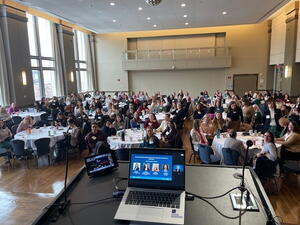
A SheLeadsGov watch party is a unique way to experience a virtual SheLeadsGov event with colleagues and peers. It offers a blend of virtual and in-person engagement, making it a valuable and enriching way to participate and learn. This year, several communities enjoyed the Virtual Summit through a watch party viewing experience. Massachusetts Women Leading Government and the city of Roanoke, Virginia, shared their photos with ICMA.

Consider a watch party for the next SheLeadsGov virtual event and stay tuned on the LinkedIn page for events to come!
Unable to Attend the Live Event?
Individuals unable to attend the live event can access on demand recordings on YouTube or can register for the free in ICMA's Learning Lab. By viewing each 1-hour session and completing a survey in the Learning Lab, attendees can earn 1 Continuing Education credit. The completion of this program conveys 3.0 credit hours towards maintaining the ICMA-CM designation.
Publish with ICMA!
We’re searching for interesting and insightful stories that can help others learn a memorable takeaway to serve their communities better.
