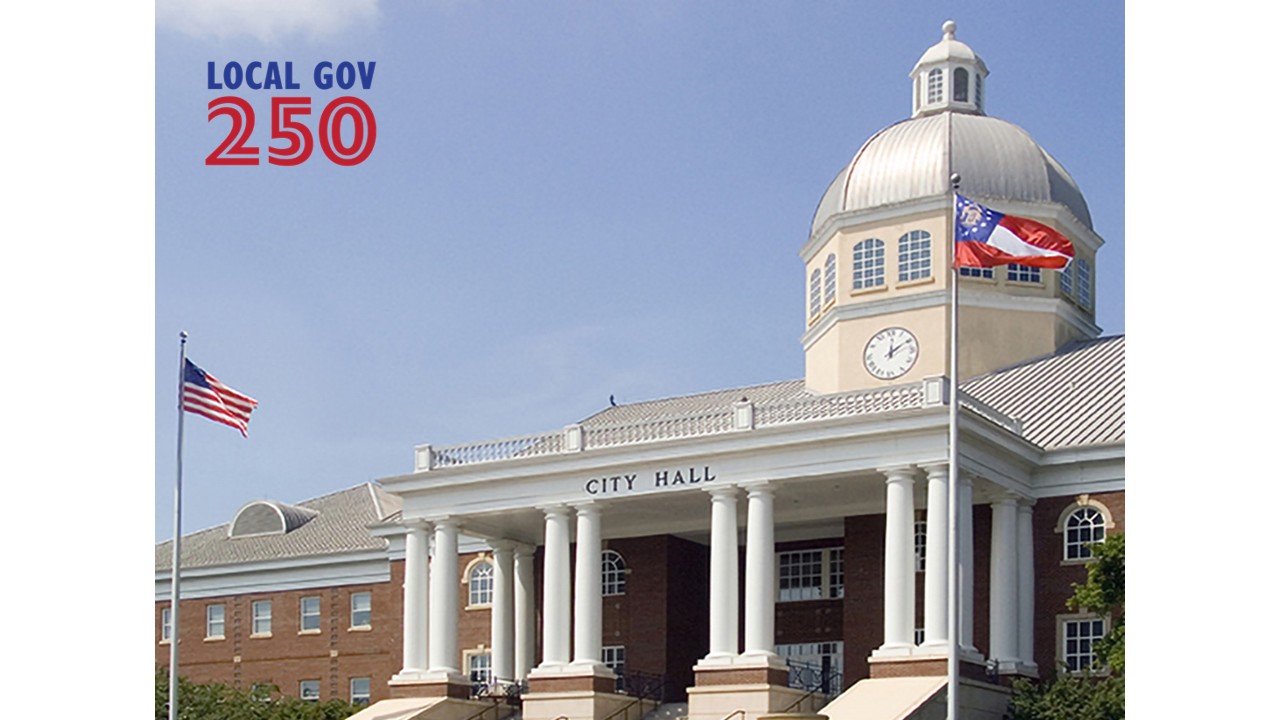
The 250th anniversary of the Declaration of Independence invites reflection on the founding ideals of the United States, but it should also invite a more practical question for those of us who serve in local government: where do residents actually experience democracy?
For many people, the answer is not abstract. It is the city council meeting where a resident speaks for three to five minutes about a neighborhood concern. It is the public budget hearing where competing priorities are debated in open session. It is the permit counter, the police response, the fire station, the park, the road project, the community event, the sanitation route, the election site, and the online dashboard that help people understand where public dollars are going. Democracy is experienced in the daily interaction between residents and the public institutions closest to them.
Local government rarely receives the symbolic attention given to national institutions, but it is where the promise of American democracy becomes tangible. Residents may disagree about federal policy, state politics, or national priorities, but they still expect clean parks, safe streets, emergency response, sound infrastructure, responsive communication, and honest stewardship of public funds. In that space, local government professionals carry a responsibility that is both technical and deeply civic.
In Roswell, Georgia, that responsibility is evident in the work of building systems that are more transparent, responsive, and accountable to the public. Our community is a historic city with modern expectations. Residents care about preserving identity and heritage, but they also expect efficient services, clear communication, digital access, data-informed decisions, and a government that can keep pace with change. The work is not always simple, but it is precisely the kind of work that defines local democracy.
Performance Management
One of the clearest examples is performance management. For years, many local governments have collected data because it was required, available, or useful to staff. The next challenge is different. We need to organize information in ways that help elected officials, employees, and residents understand whether the government is delivering on its commitments. Data should not be used as decoration in a report. It should help answer basic democratic questions: What did we say we would do? Are we doing it? What is improving? What is not? What tradeoffs should the community understand?
This is why performance reporting matters. A well-designed performance system does more than track metrics. It creates a shared language for accountability. It connects strategic priorities to departmental work. It helps staff see how their daily responsibilities support community outcomes. It gives elected officials a clearer basis for policy oversight. Most importantly, it gives residents a better view into how their government is performing.
Budget Transparency
The same principle applies to budget transparency. The annual budget is one of the most important democratic documents a local government produces. It reflects values, priorities, constraints, and choices. Yet to many residents, the budget can feel inaccessible, technical, or disconnected from daily life. Local government professionals have an obligation to make that information more understandable. That means explaining what it costs to sustain core services, what new investments are intended to accomplish, and what service impacts may result when resources do not match expectations.
This is not just a communication exercise. It is a trust-building exercise. Trust is strengthened when residents can see the connection between public dollars, public priorities, and public outcomes. Trust is weakened when decisions appear disconnected, overly technical, or hidden behind process language. The work of professional management is to make complexity understandable without oversimplifying reality.
Public Engagement
The way we engage our residents must also evolve. Traditional meetings remain essential because they create a formal and public record of decision-making. But engagement cannot be limited to those who have the time, confidence, transportation, or familiarity with the government process to attend a meeting. Modern local government must use multiple channels to reach residents where they are, while still protecting the integrity of official decision-making. Websites, newsletters, social media, open data tools, public dashboards, surveys, and in-person conversations all play a role.
At the same time, the fundamentals still matter. Transparency requires more than publishing information. It requires clarity. Accountability requires more than adopting goals. It requires follow-through. Innovation requires more than new technology. It requires better processes, better governance, and a willingness to examine whether the way we work still serves the public well.
That is one of the most important lessons for the next era of local government. The future of democracy will not be secured by technology alone. Artificial intelligence, automation, dashboards, digital engagement platforms, and smart city tools can improve public service, but only if they are grounded in ethics, accessibility, professional judgment, and public purpose. Technology should make government more human, not less. It should help residents find information faster, help employees solve problems more effectively, and help leaders make better decisions. It should not replace the responsibility to listen, explain, deliberate, and serve.
Form of Government
The council-manager form of government is especially important in this environment. Professional local government management provides stability, competence, and continuity in a democratic system that is intentionally responsive to community priorities. Elected officials set policy direction and represent the will of the community. Professional staff translate that direction into operations, service delivery, implementation, and measurable results. When that relationship works well, democracy benefits. Policy is informed by professional analysis. Operations are guided by public values. Residents receive services that are both responsive and responsibly managed.
This relationship also requires humility from those of us in administrative leadership. We are stewards, not owners, of public institutions. We are responsible for systems that existed before us and will continue after us. Our task is to leave them stronger, more resilient, more transparent, and more capable than we found them. That requires technical competence, but it also requires character. It requires patience in the face of criticism, discipline in the face of competing priorities, and a commitment to public service even when the work is not visible.
In many ways, the most important work of local government is quiet work. It is the policy review that prevents confusion later. It is the procurement process that protects fairness. It is the emergency plan that is tested before the storm. It is the employee training that improves service quality. It is the dashboard that helps a resident understand a project. It is the agenda item prepared carefully so elected officials can make an informed decision. It is the phone call returned, the pothole repaired, the inspection completed, and the public record maintained.
These acts may not appear in history books, but they are the habits of self-government. They are how people learn whether institutions can be trusted. They are how communities experience competence, fairness, responsiveness, and respect.
As the United States marks 250 years, local governments should not treat the anniversary only as a commemoration of the past. It should also be a call to strengthen the practices that will carry democracy forward. That means investing in professional capacity. It means building transparent systems. It means communicating clearly. It means using data responsibly. It means engaging residents with sincerity. It means helping employees understand that their work is not merely operational, but civic.
The next 250 years of American democracy will be shaped in many places, including Congress, state capitals, courts, schools, civic organizations, and private institutions. But they will also be shaped in city halls, county administration buildings, public works yards, police departments, fire stations, parks offices, planning counters, finance departments, libraries, and community rooms across the country.
That is where democracy meets daily life. That is where public trust is either built or lost. And that is where local government professionals have the privilege and responsibility to serve.
The work is not always visible, but it matters. It matters because every agenda, every budget, every public meeting, every service request, every performance measure, and every resident interaction is part of a larger civic promise. Local government is where democracy becomes practical. It is where ideals become services. It is where public service becomes personal.
For those of us who have chosen this profession, the 250th anniversary is a reminder that our work is not simply to manage organizations. It is to help sustain the conditions that make self-government possible. That is a high calling, and it is one worth renewing.
Learn More about Local Gov 250
In collaboration with other local government associations, ICMA is commemorating America’s 250th anniversary by celebrating the “democracy at the doorstep” facilitated by cities, counties, regional councils, and tribal governments. Learn more at localgov250.org.

DR. JOE PENNINO is deputy city administrator of planning, performance, and innovation for Roswell, Georgia.
Publish with ICMA!
We’re searching for interesting and insightful stories that can help others learn a memorable takeaway to serve their communities better.
