As the United States marks the 250th anniversary of the Declaration of Independence, Americans have an opportunity to reflect not only on the ideals that shaped our nation, but also on the institutions that sustain our democracy every day.
Much of that reflection focuses on national leaders, landmark events, and the enduring principles embedded in our founding documents. Yet the democratic experiment is sustained not primarily in Washington, D.C., but in thousands of cities and towns across the country. Local government is where democracy becomes real.
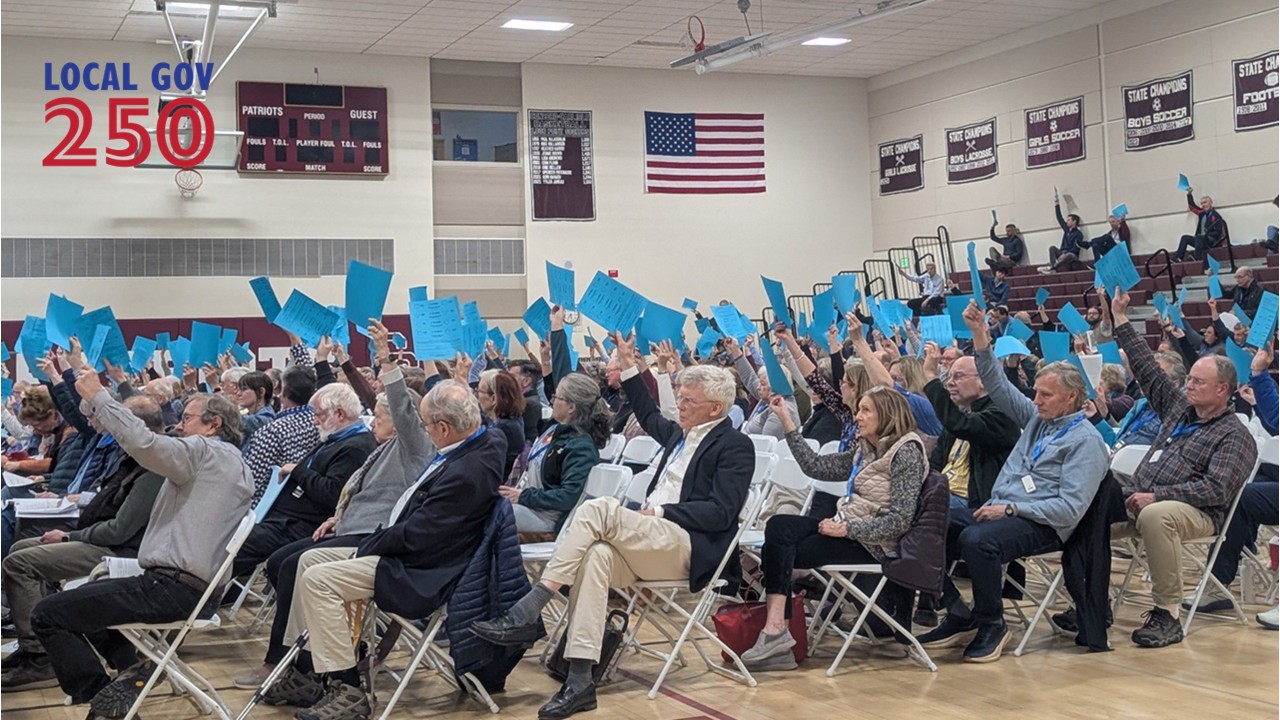
It is where residents attend public meetings, volunteer in service on boards, advocate for causes they care deeply about, and hold public officials accountable. It is where budgets are debated and community priorities are established. It is where residents most directly encounter government, and where government most directly encounters its people.
Early in my career, I assumed that the residents who attended public meetings represented the community’s collective voice. They were the people who showed up, organized around issues, and participated directly in the democratic process. Over time, I came to realize that the public is much larger than the room.
A parent rushing between work and childcare responsibilities may care deeply about a local issue but lack the flexibility to attend an evening meeting. A senior citizen may follow every discussion closely but feel uncomfortable speaking publicly. A small business owner may spend every available hour keeping a business afloat, never having the opportunity to participate in decisions that affect its future.
Some residents are unable to participate in public meetings; others simply choose not to. While local governments should continually strive to improve public engagement, it is equally important to recognize that not every resident wishes to participate directly in every discussion. The absence of participation should not be mistaken for the absence of interest.
The residents who participate publicly perform an essential civic function, and their voices deserve to be heard. But they are only part of the public we serve. One of the most important lessons I have learned in local government is that effective leadership requires listening carefully to those who speak while never losing sight of those who do not.
That realization fundamentally changed how I think about democratic leadership. Public participation is indispensable, but participation and representation are not always the same thing. The responsibility of local government is not simply to respond to the most visible participants in a public debate; it is to make decisions that reflect the broader interests of the community as a whole.
As a local government professional, I have come to appreciate that democracy is often far less tidy than our civic textbooks suggest. It is easy to celebrate democracy when people agree. The true test comes when they do not.
Every local government leader quickly learns that communities are rarely unified around a single vision. Residents bring different experiences, priorities, values, and expectations to every public discussion. One group may advocate for additional housing, while another fears its impact on community character. One resident may call for increased public spending to address a pressing need, while another insists that taxes are already too high. Some demand immediate action; others urge caution and deliberation. Every voice matters, but so do the interests of those who never speak at all.
In recent years, that work has become increasingly difficult. Public discourse has become more polarized, social media has amplified conflict and misinformation, and distrust of institutions has grown. Public officials often find themselves subject to criticism that is immediate, personal, and sometimes relentless.
At times, it can feel as though the most visible voices define the conversation. Effective local government leadership requires resisting that temptation and ensuring that all voices are considered, including those who may never appear at a public hearing or post on social media.
The role of local government is not to satisfy those who speak most often, nor is it to dismiss them. Rather, it is to create processes that allow diverse perspectives to be heard and considered while ensuring decisions are made in the broader public interest.
That work requires patience, humility, and a willingness to remain engaged when easy answers prove elusive. Over the years, I have come to think of this space as the messy middle—the space between competing viewpoints where there are no perfect answers, only imperfect choices. It is where communities wrestle with difficult tradeoffs involving limited resources, competing priorities, and deeply held values. Most local government decisions occur in this space.
Many of the hardest decisions are not choosing between a good option and a bad one. They are choosing among multiple worthwhile priorities when time, money, and organizational capacity are limited.
Should a community invest more heavily in infrastructure, public safety, recreation, housing, environmental protection, or economic development? How should finite financial resources be allocated among competing needs? How should competing interests be balanced when every option carries benefits and consequences?
These are not technical questions alone, but democratic questions. And democracy does not eliminate the need for difficult choices. If anything, it makes those choices more complex because they must be informed by multiple perspectives and viewpoints.
Perhaps the greatest misconception about democracy is the belief that disagreement signals failure. In reality, disagreement is evidence that democracy is functioning. People care enough to participate, advocate for their beliefs, challenge assumptions, and test ideas. The goal is not to eliminate disagreement, but to create conditions in which it can occur constructively and respectfully, ensuring that all perspectives, not just the most visible, are considered. That is easier said than done.
Local government professionals frequently find themselves navigating emotionally charged issues that touch on residents’ identities, values, finances, and sense of place. In these moments, maintaining trust becomes just as important as making decisions.
Trust is not built through unanimous agreement. Residents may disagree with a decision, but they are far more likely to accept its outcome when they understand how it was reached and believe the process was fair.
After more than three decades in local government, I still leave public meetings convinced that I could have communicated more clearly or listened more carefully. The work has taught me that one of the central responsibilities of local government leadership is earning and re-earning public trust.
Every interaction matters. Every difficult conversation presents an opportunity either to strengthen trust or diminish it. Residents may not always agree with a decision, but they deserve to know that they were heard, that their questions were considered, and that their perspectives were respected.
The longer I serve, the more convinced I become that public trust is not built through perfection. It is built through sincerity, consistency, transparency, and a willingness to keep showing up, even when the conversations are difficult. Trust is also built when local government professionals remember that they are stewards of the democratic process, not owners of it.
Professional administrators do not determine community values. That responsibility belongs to the people and their elected representatives. Our role is to provide information, implement decisions, manage resources responsibly, and help create an environment in which democratic decision-making can occur.
In many respects, local government professionals are custodians of something larger than any individual project, budget, or policy initiative. We are custodians of public trust, and trust, once lost, is far more difficult to rebuild than to preserve.
After more than three decades in local government, I have come to believe that effective democratic leadership requires several things: listening beyond the loudest voices, creating space for constructive disagreement, accepting that participation and representation are not always the same, and recognizing that public trust must be earned repeatedly. None of these responsibilities is easy, and none comes with a perfect formula. Yet they remain essential to sustaining the institutions and relationships upon which self-governance depends.
As we celebrate the nation’s semiaquincentennial anniversary, I find myself reflecting on the remarkable durability of the American experiment in self-governance. While much has changed since 1776, one principle remains constant: democracy depends upon those who are willing to engage with one another in pursuit of the common good. That work is often frustrating and exhausting, yet also profoundly meaningful.
Every public meeting, budget discussion, neighborhood conversation, and local election represents another chapter in the ongoing story of American democracy. The founders could not have anticipated the complexity of modern local government, but they understood something fundamental about self-governance: democracy is not a destination, but a practice.
That practice continues every day in communities across America. Not in moments of perfect consensus, and certainly not in the absence of conflict. It continues when residents engage with one another despite disagreement and when public servants remain committed to serving the entire community, and not just the people in the room.
Two hundred and fifty years after the Declaration of Independence, that work remains unfinished, but as important as ever. It is in the messy middle that democracy is tested, sustained, and renewed.
KERRY A. LAFLEUR, ICMA-CM, is town manager for Concord, Massachusetts.
Publish with ICMA!
We’re searching for interesting and insightful stories that can help others learn a memorable takeaway to serve their communities better.
