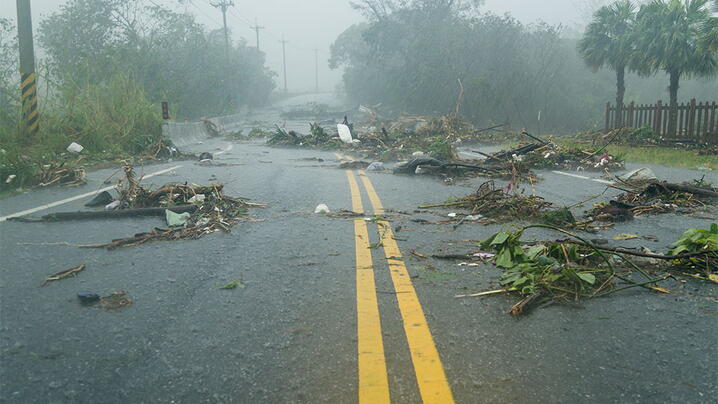
As climate change intensifies and public health threats become increasingly complex, local governments face an unavoidable truth: disasters may be global in scope, but their impact is profoundly local. From a severe weather event disrupting a small borough’s wastewater system to a campus town dealing with post-pandemic EMS staffing shortages, communities are realizing that off-the-shelf emergency protocols are no longer enough.
Hazards are no longer episodic anomalies. They are structural realities demanding systemic responses. Yet, most emergency management frameworks still rely heavily on top-down response models that don’t reflect the unique vulnerabilities, assets, and dynamics of individual communities.
If public safety is to remain resilient, then local governments must champion localized preparedness strategies—grounded in community data, tailored engagement, and interdepartmental coordination.
The Case for Community-Centered Emergency Planning
The Federal Emergency Management Agency’s “Whole Community” approach already underscores the importance of involving residents in emergency preparedness. But implementation often stops at stakeholder checklists or town hall meetings. What’s missing is a model where community engagement is baked into the planning process—not merely a procedural afterthought.
In State College, Pennsylvania, where I currently serve as a local government management fellow, emergency preparedness is coordinated through the Centre Region Council of Governments. The borough does not operate its own independent disaster plan; instead, it participates in a regional Emergency Operations Plan shared with neighboring municipalities. This plan, jointly managed by the Centre Region Emergency Management Coordinator, is the primary framework for disaster response, hazard mitigation, and inter-agency coordination. While the Borough is a partner in this unified effort, there is a clear opportunity to better align components such as land use, transportation, and housing data with emergency planning assumptions.
Recognizing these gaps doesn’t signal failure—it reveals a path forward.
As climate uncertainty and demographic shifts reshape what “preparedness” must look like, municipalities that integrate planning data with emergency assumptions will be better positioned to protect all residents, especially those who have been historically overlooked in crisis response frameworks.
Public Works and Policy Must Speak the Same Language
Too often, emergency preparedness sits siloed within police or fire departments. Yet, a flooding event might require immediate coordination between zoning officials, stormwater engineers, and code enforcement—before any first responder is dispatched.
Local government leaders must bridge the disconnect between infrastructure policy and emergency operations. This means preemptively identifying:
- Infrastructure weak points (aging culverts, pump stations).
- Vulnerable populations (elderly, unhoused, limited-English residents).
- Technology gaps (alert systems, GIS mapping capacity).
- Cross-departmental dependencies (which office owns what in a crisis?).
The post-disaster after-action report shouldn’t be the first time these questions are asked.
Preparedness in Practice: Building Tools and Culture
Localized resilience is about more than updated emergency plans—it’s about creating repeatable systems and internal capacity. This includes:
- Running tabletop simulations with all departments, not just emergency personnel.
- Mapping community organizations that can provide emergency supplies, translation support, or temporary housing.
- Establishing decentralized command zones in neighborhoods most at risk.
- Using municipal communication channels (social media, newsletters, utility bills) for year-round preparedness education.
Technology can support this effort, but it cannot replace trust. When emergency protocols are understood, rehearsed, and communicated across all sectors—from sanitation to finance to public relations—the result is not just faster recovery, but fewer preventable harms in the first place.
Local Governments Can Lead the Way
When emergencies happen—whether it’s a flood, wildfire, or power outage—local governments are usually the first to respond. They know their communities best: where older adults live, which neighborhoods have language barriers, or who might need help evacuating.
However, being prepared for disasters requires more than just having emergency sirens or fire drills. It means utilizing high-quality data, fostering robust partnerships, and ensuring that everyone in the community is included.
Many communities are starting to think long-term. Instead of just reacting to floods, fires, or storms, they’re asking questions like: Are our buildings and roads ready for the next big event? How do we protect the people most at risk? Planning for these kinds of questions helps create safer, more prepared communities.
Even though many towns and cities face challenges like tight budgets and small staff, they can still lead the way. By bringing together departments, such as planning, emergency services, and public works, and incorporating community voices, they can develop robust plans that protect everyone.
When local governments do this well, they’re not only protecting lives—they’re also putting themselves in a better position to get funding and support from the state and federal level to improve their community's resilience.
Final Reflection: Leading from the Local Level
Public safety cannot afford to be generic. It must be personalized, proactive, and deeply integrated into the daily operations of local government. Emergency management is not just about first responders; it’s about the planners, administrators, engineers, communicators, and residents who together create resilient systems.
As someone serving in a municipality today, I have seen firsthand how a shift toward a localized strategy can unlock new cross-sector collaborations and facilitate better long-term planning. The challenge before us is not whether we can respond to the next crisis; it’s whether we can prepare in a way that’s rooted in our community’s unique needs, strengths, and people.
Preparedness begins when local governments claim their rightful role—not just as responders, but as architects of resilience.
Publish with ICMA!
We’re searching for interesting and insightful stories that can help others learn a memorable takeaway to serve their communities better.
